

Where Office Lockers Actually Get Used Today
Let’s step away from catalog descriptions and look at real usage.
Open-Plan Offices
In shared workspaces, employees don’t “own” desks anymore.
They need somewhere to store:
laptops
personal items
documents
According to workplace observations, lockers help reduce desk clutter and improve organization, which directly affects efficiency.
Break Rooms & Staff Areas
This is where lockers quietly solve everyday problems.
Employees store:
bags
food containers
gym gear
Without lockers, these items end up on desks or floors. Not ideal.
Reception & Temporary Storage
Visitors, contractors, and short-term staff often need secure storage.
Compact locker units handle this without disrupting office flow.
Hybrid & Flexible Offices
This is where demand really increased.
As one workplace discussion noted:
“Lockers… are coming back in shared work environments.”
When desks become flexible, lockers become essential.
The Real Problems Office Lockers Solve
Companies don’t install lockers for decoration.
They solve operational issues.
Problem 1: Clutter reduces productivity
A messy workspace slows people down.
Employees waste time looking for items or clearing space.
Lockers create a simple rule:
“Keep only what you need at your desk.”
Problem 2: Security concerns
Laptops, personal belongings, confidential files — all need protection.
A properly designed Office Locker adds a secure layer without complex systems.
Problem 3: Cleaning and maintenance
Cleaning teams prefer simple environments.
Fewer personal items on desks = faster cleaning.
Plastic lockers support this because they:
resist stains
clean easily
don’t require repainting
Problem 4: Changing office layouts
Modern offices evolve frequently.
A fixed storage system doesn’t adapt well.
Modular lockers solve this.
Why Plastic Lockers Are Taking Over Offices
This shift is not about trend. It’s about performance over time.
Material behavior matters more than appearance
A plastic locker made from HDPE behaves differently than metal.
It doesn’t rust.
It doesn’t absorb moisture.
It doesn’t degrade in the same way.
These are built-in properties — not surface treatments.
Long-term cost becomes lower
Plastic lockers require:
less maintenance
no repainting
fewer replacements
That reduces total cost over years, not months.
They handle daily wear better
Office lockers may not face extreme environments like factories, but they face constant use.
HDPE lockers resist:
scratches
dents
impacts
That keeps them looking consistent over time.
They support modern design
From a design perspective, lockers now need to blend into office interiors.
Plastic lockers offer:
multiple colors
modular layouts
flexible configurations
Technical Advantages of Heavy Duty Plastic Lockers
This is where many articles stay too shallow. Let’s go deeper.
HDPE Material Structure
HDPE is not “basic plastic”.
It’s used in:
industrial piping
chemical containers
structural applications
Because it:
resists chemicals
blocks moisture
handles impact
In lockers, this translates to durability that doesn’t depend on coatings.
Rotomolding Technology
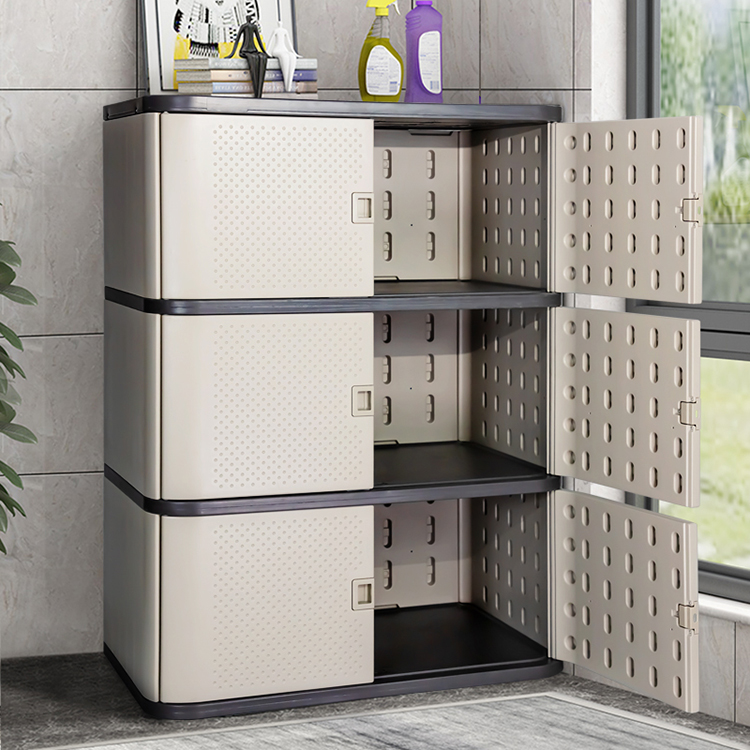
Many Heavy Duty Plastic Locker systems use rotational molding.
This creates:
seamless structure
uniform thickness
stronger corners
Result: fewer weak points.
Anti-Corrosion & Waterproof Design
Unlike metal lockers:
no rust
no swelling
no internal corrosion
This makes them suitable even for:
humid offices
pantry areas
semi-outdoor spaces
Hygiene & Easy Cleaning
HDPE resists:
bacteria
mold
moisture buildup
That’s why it’s also used in:
hospitals
food environments
How to Choose the Right Office Locker
This is where decisions become practical.
1. Define the usage scenario first
Ask:
daily users?
shared or assigned lockers?
what items stored?
This determines size and configuration.
2. Choose the right material
For long-term projects:
✔ Heavy Duty Plastic Locker (HDPE)
better durability
lower maintenance
3. Pay attention to structure
Not all lockers are equal.
Check:
door alignment
hinge quality
frame rigidity
Weak structure leads to early failure.
4. Select the correct lock system
Options include:
padlock
combination lock
RFID / smart lock
Choose based on usage frequency and security level.
5. Work with a reliable plastic locker factory
Experienced suppliers offer:
consistent quality
customization
project support
A good plastic locker factory helps avoid design mistakes early.
Recommended Parameters for Office Use
Small Offices
2–4 tier lockers
compact footprint
simple locks
Medium Offices
mixed configurations
shared + personal lockers
modular design
Large Corporate Spaces
smart lockers
centralized layout
high-capacity systems
High-End Offices
customized colors
integrated design
hidden storage layout
Common Mistakes Buyers Make
Mistake 1: Treating lockers as furniture
They are not decorative items.
They are operational tools.
Mistake 2: Ignoring future flexibility
Offices change.
Lockers should adapt.
Mistake 3: Choosing cheap materials
Lower-quality lockers fail faster.
That increases long-term cost.
Mistake 4: Overlooking supplier capability
Not every supplier can supply plastic locker systems at scale.
Production consistency matters.
FAQ
1. Are plastic lockers suitable for offices?
Yes. Modern Office Locker systems made from HDPE provide durability, hygiene, and low maintenance.
2. What is a Heavy Duty Plastic Locker?
It is a locker made from high-density polyethylene designed for high-use environments with strong impact and moisture resistance.
3. Do plastic lockers look professional?
Yes. Many designs support modern office aesthetics with customizable colors and layouts.
4. How long do office lockers last?
High-quality plastic lockers can last many years with minimal maintenance.
5. Can a plastic locker factory customize designs?
Yes. Most manufacturers offer size, color, and locking system customization.
Conclusion
An Office Locker is easy to overlook — until the office starts feeling disorganized.
Then it becomes essential.
A well-designed plastic locker does not draw attention.
It simply supports how people work.
And in modern workplaces, that quiet efficiency matters more than ever.