

Everyday Scenes Where HDPE Plastic Office Lockers Make a Real Difference
Picture a typical Monday morning in a mid-size corporate office. Employees rush in, drop bags, hang coats, and stash laptops before the first meeting. With HDPE Plastic Office Lockers the noise level drops right away. Doors close with a soft click instead of that echoing metal bang that carries down every hallway. HR teams tell me staff actually feel calmer starting their day—no more constant clanging that raises stress levels before the coffee even kicks in.
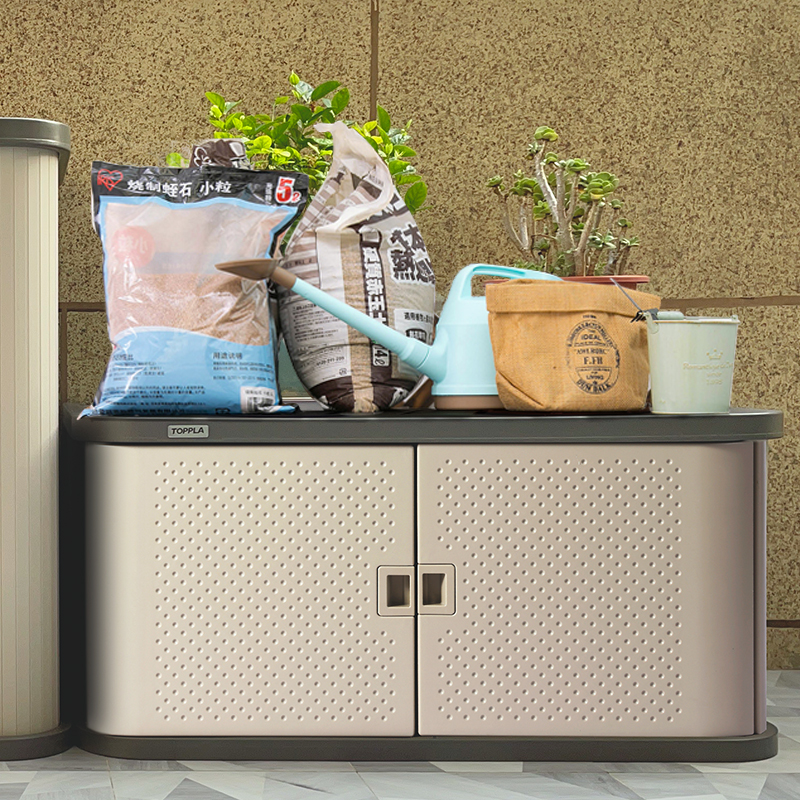
Now head to the break room or staff lounge. Wet umbrellas, gym bags from lunchtime workouts, and takeout containers get crammed inside. Traditional metal lockers start rusting in that humid environment within months. HDPE Plastic Office Lockers just shrug it off. The waterproof material and sealed edges mean you can wipe the whole bank down in minutes and they look fresh again. Facility managers love it because they spend less time on upkeep and more time on actual office improvements.
Hybrid work has changed everything. Many companies now enforce phone-free focus zones or hot-desking setups. That’s exactly why phone lockers for offices have become such a hot item for supply plastic locker buyers. Our compact JX-382M units sit right outside conference rooms or along open-plan walls. Employees drop their phones in a numbered slot, lock it, and walk away fully present. Managers report fewer distractions during meetings and better overall focus. Importers who stock these for international office tenders say they move fast—every modern workplace needs a solution like this.
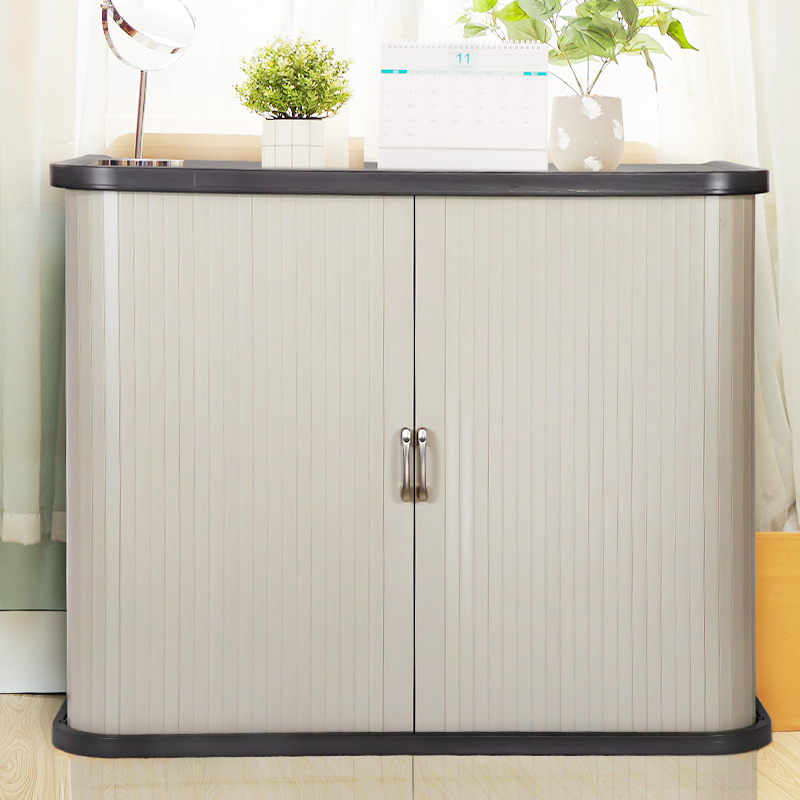
Smaller enterprises and co-working spaces use shorter, brighter HDPE Plastic Office Lockers near reception or collaborative areas. Clean whites, soft grays, or branded colors match the office aesthetic while rounded corners keep the space safe and professional. No sharp metal edges means fewer accidental bumps and fewer complaints from employees.
Larger corporate campuses need taller, wider setups for full-day storage—laptops, jackets, personal items, even small equipment. Our T-320M models let facilities teams mix single-tier, double-tier, and multi-column banks to fit awkward wall spaces perfectly. Wholesalers buying bulk love the modular design because one container can hold a mix that covers an entire floor or building.
I remember one Australian importer who ordered 400 units for a new tech headquarters. Six months after install the facilities director sent photos showing the lockers still looked showroom fresh despite 800 employees using them daily. That kind of real-world proof is why B2B buyers keep coming back to plastic locker factory partners who actually test their products in live office environments.
The Daily Headaches Traditional Metal and Wood Lockers Create in Offices
Metal office lockers look decent when they arrive. Then real life kicks in. Humidity from rainy commutes or gym bags starts rust spots in months. Doors stick. Hinges loosen. Employees kick them accidentally, slam them, dent them constantly. Maintenance crews end up painting or replacing panels every couple years. One facilities manager showed me his expense log—his company spent more on locker repairs in two years than the original purchase price.
The noise is another killer. Metal doors clang every single time they open or close. In an open-plan office that sound never stops. It carries into meeting rooms, raises stress, and makes hybrid workers feel like they’re still in a noisy factory. Some companies have actually started removing traditional lockers because the constant racket became unbearable.
Wood lockers do even worse in office conditions. Moisture from coffee spills or cleaning makes them swell and warp fast. Paint peels. Shelves sag under heavy laptop bags. Mold can show up in humid break rooms. You’re replacing them every 5–7 years instead of getting 15–20 years of service.
Safety issues add up too. Dented metal leaves sharp edges that snag clothing or cut fingers. Warped doors won’t latch, so personal items sit exposed. In busy offices those hard corners become hazards during rush hours.
For B2B buyers these problems turn into unhappy customers and lost repeat orders. Importers stocking metal hear constant complaints. Wholesalers see higher returns. Brand owners trying to build long-term office relationships watch their reputation take hits when the lockers fail early.
HDPE Plastic Office Lockers cut straight through all of it. No rust. No dents. Quiet operation. Almost zero maintenance. Offices stay organized, professional, and calm while you protect your bottom line as a reseller or OEM partner.
Why HDPE Plastic Office Lockers Outperform Metal and Wood: The Technical Details That Matter
We don’t just slap these together at our plastic locker factory—we engineer them for the daily traffic offices actually see. The base material is high-density polyethylene (HDPE) or ABS engineering plastic. These plastics soak up almost zero moisture, so mold and mildew never get started. UV stabilizers mixed into the resin keep colors looking fresh even near windows or in bright lobbies. Because the color goes all the way through the material—not just painted on—scratches barely show. You can drag a cart past or have a bag slam into it and the locker still looks professional.
Panel thickness is where most cheap plastics locker suppliers cheat and then fail fast. Our heavy-duty models use 20–32 mm thick panels on sides, doors, and reinforced bases depending on the section. That gives real rigidity. Shelves hold 40–60 pounds without sagging. The injection or rotational molding process fuses everything into one solid piece that resists cracking even under repeated daily use.
Hinges are the quiet heroes most buyers overlook. We use high-strength nylon ones that never rust and glide smoothly for tens of thousands of cycles. No squeaking. No binding. The door shuts with a gentle click instead of an office-disrupting bang. That difference alone makes these lockers worth it for any professional environment.
Locking options fit every need. Standard padlock hasps work for most employee lockers. Built-in combination or keyed locks suit higher security areas like IT storage. Phone lockers for offices usually get individual key locks with elastic cords so staff keep the key handy. Some OEM clients ask for electronic smart locks in executive suites or for valuable equipment.
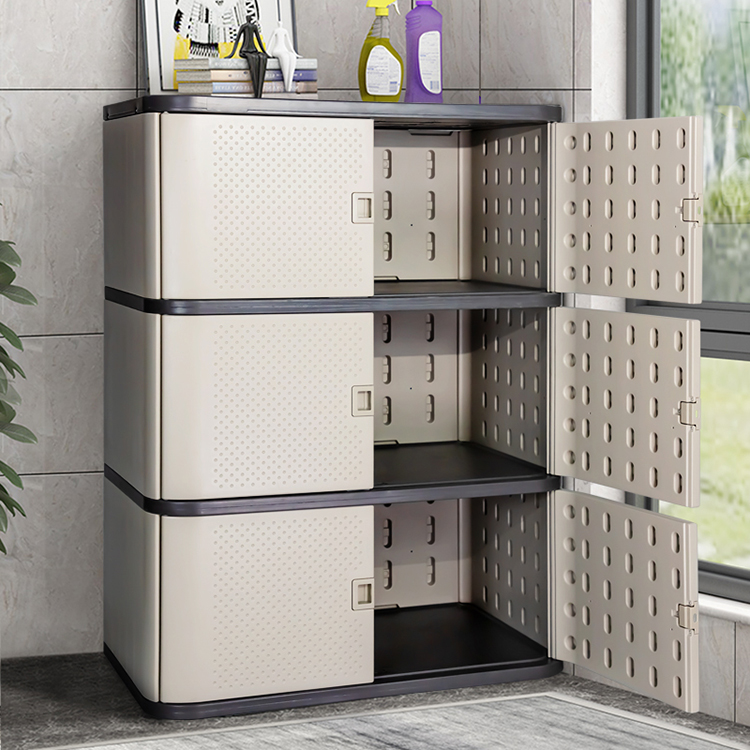
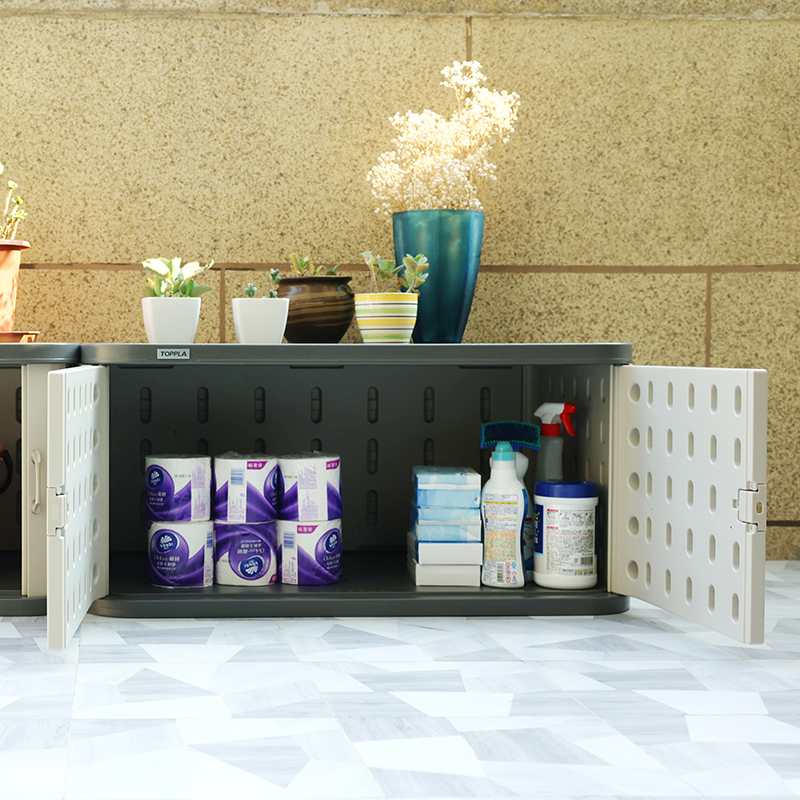
Ventilation is built in the right places. We mold slots into doors and sides so air moves through and gear dries fast without trapping smells. Adjustable shelves plus integrated hooks let employees set things up exactly how they want. Many units also have coat hooks, shelf dividers, and even small accessory compartments.
Side-by-side with metal you skip all the painting, rust treatments, and constant part replacements. Compared to wood you never deal with rot, swelling, or bugs. These HDPE Plastic Office Lockers weigh about half of metal ones, so installation crews move them easily and importers save on shipping weight. Yet the smart ribbing molded inside the panels gives them strength that matches or beats heavier materials.
We test these units hard—repeated impacts, daily office abuse, humidity chambers. They keep looking good long after metal starts peeling and wood starts rotting. That’s not hype. That’s what facilities managers report back to us month after month from real installations.
How B2B Buyers Should Pick the Right HDPE Plastic Office Lockers
Start with the actual environment your customer faces. Standard open-plan offices do fine with HDPE models that have good airflow. Break rooms or any humid area need the full weather-resistant versions with sealed seams and extra UV protection. Phone lockers for offices want compact wall-mount designs that fit tight spaces near workstations.
Next, get honest about load and daily use. Ask what the heaviest items will be—laptop bags, winter coats, personal gear. Quality HDPE Plastic Office Lockers publish clear shelf ratings. Look for at least 40–60 pounds on reinforced models.
Door style changes everything for daily flow. Single-tier tall lockers suit full-time staff with larger storage needs. Double-tier or triple-tier units squeeze more storage into crowded offices. Phone lockers for offices usually come in banks of 4, 6, or 8 smaller compartments.
Customization is where you separate good plastic locker factory suppliers from great ones. As an OEM client or brand owner you want exact color matching to company branding, logo engraving, and modular setups that mix heights and widths. Importers appreciate knock-down packaging that cuts container volume and freight costs.
Security level needs to match the risk. Basic padlock hasps handle most employee lockers. High-value areas want keyed or electronic systems with master key override for facilities staff.
Warranty and support tell you everything about how confident the supplier really is. Top plastic locker factory partners back their products with 15–20 year warranties on materials and construction. Ask about replacement parts availability and installation help.
Finally, run the total cost of ownership numbers. HDPE Plastic Office Lockers cost more upfront than cheap metal, but they deliver way lower maintenance and replacement expenses over time. Smart B2B buyers always calculate that full lifecycle cost before signing big orders.
Recommended Specs and Parameters for Different Office Uses
For a typical corporate hallway or staff area I usually recommend HDPE Plastic Office Lockers around 36 inches wide per column, 72 inches tall for full-size units, and 18–24 inches deep. Four or five adjustable shelves rated at least 50 pounds each. Doors at 32 mm thick with nylon hinges throughout. Lockable with padlock hasps or built-in combinations.
Phone lockers for offices need a different approach. Compact models like the JX-382M give individual compartments about 8–10 inches wide and tall, stacked in rows. Each gets its own secure lock and ventilation. Wall-mount or freestanding options let companies place them exactly where employees need them.
Smaller offices or co-working spaces work best with shorter, wider units in neutral or branded colors. 48–60 inches tall, multiple tiers, soft rounded corners, and plenty of coat hooks. Adjustable shelves make sure everyone can reach everything easily.
Break room or wet-area jobs call for heavier specs. Look for 22–30 mm panels everywhere, reinforced bases, and full waterproofing. Multiple-column banks that integrate with bench seating work great in changing or lunch areas.
OEM and wholesale clients often mix configurations in one shipment—tall employee lockers, compact phone lockers, and storage units all knock-down in the same container. Always check the exact weight ratings, material certifications, and testing data the manufacturer provides. Good plastic locker factory suppliers put the real numbers front and center so you can spec accurately for bids and tenders.
Common Mistakes B2B Buyers Make When Sourcing Office Lockers
The number one trap I see is chasing the absolute lowest price without checking material quality. Thin panels and weak hinges fall apart fast under real employee use. Always demand 20 mm+ side panels and 32 mm doors on any HDPE Plastic Office Lockers you stock.
Overlooking shipping and assembly details costs importers real money. Cheap suppliers ship fully assembled units that waste container space and often arrive damaged. Quality plastic locker factory partners offer knock-down designs with clear instructions and color-coded parts that two people can put together quickly.
Ignoring future growth leads to mismatched lockers later. Buy modular systems that let you add columns or tiers as headcount increases instead of starting over with a different brand.
Picking the wrong lock type creates daily headaches for office staff. Combination locks sound easy until employees forget numbers every week. Padlock hasps with master keys often work better for larger companies.
Skipping accurate site measurements wastes time and cash. Measure hallway widths, door clearances, and wall space before ordering. One inch off can mean expensive on-site modifications.
And don’t forget to ask about color consistency on large orders. Quality manufacturers use the same resin batch for entire shipments so every locker matches when installed.
Wrapping It All Up
HDPE Plastic Office Lockers turn noisy, high-maintenance staff areas and break rooms into organized, quiet, long-lasting spaces that support employees and facilities teams for years. They kill rust problems, cut noise, slash maintenance costs, and deliver the technical performance real offices need every day. Once you see the actual scenes they solve, the pain points they remove, the selection details that matter for B2B success, the exact specs that fit different applications, and the mistakes that waste money, picking the right plastic locker factory feels pretty straightforward.
Stop dealing with failing metal lockers and endless repair bills. Partner with a supplier who knows HDPE Plastic Office Lockers inside out and give your office customers storage they can actually count on. Your business relationships and their workspaces will both come out ahead.
FAQs
1. Are HDPE Plastic Office Lockers tough enough for daily employee use?Yes. HDPE and ABS with 20–32 mm panels and nylon hinges handle thousands of opens, slams, and impacts without denting or rusting.
2. How do phone lockers for offices actually help workplace productivity?They give secure individual storage right outside meeting rooms so staff stay focused. Managers see fewer distractions and better meeting flow.
3. Why do B2B importers prefer plastic locker factory suppliers like Toppla?Knock-down shipping saves container space and freight. Full customization, 15–20 year warranties, and consistent quality across big orders make resale and install easy.
4. Can HDPE Plastic Office Lockers handle humid or break-room areas?Absolutely. Waterproof material, sealed seams, and UV protection keep them looking new in lunch areas, gyms, or any high-moisture office spot.
5. How long do these office lockers typically last?Most carry 15–20 year warranties and keep performing well beyond that with almost no maintenance when installed right.