

Where School Lockers Are Used
School lockers are used in hallways, classrooms, libraries, activity rooms, and staff areas. In some schools, they are also used as phone storage units to reduce distraction during lessons.
For importers, wholesalers, brand owners, and OEM customers, the market is broader than it first appears. A School Locker can serve student storage, personal item management, and controlled device collection, depending on how the school is organized.
Common application scenarios include:
Student personal storage in classrooms or corridors.
Phone lockers for schools to support device-free learning.
Shared storage in training centers, academies, and campus facilities.
Modular storage layouts for large school projects.
Branded storage solutions for distributors and private-label buyers.
In practice, the product has to fit the school routine, not the other way around. If the locker is awkward to use, teachers will feel it immediately and students will avoid it just as fast.
Why Buyers Choose Plastic
For many procurement teams, plastic locker products are attractive because they solve several practical problems at once. They are lighter than metal, easier to maintain, and less likely to rust in humid or high-touch environments.
This is one reason Heavy Duty Plastic Lockers have become a strong option in the school market. Schools want products that keep their appearance over time and do not create extra maintenance work for staff.
The main advantages are straightforward:
Better resistance to moisture and corrosion.
Easier cleaning and day-to-day maintenance.
More stable appearance over long use cycles.
Lower risk of surface wear compared with some traditional materials.
More flexibility in color and modular design.
For buyers who compare across suppliers, the difference is often not obvious in a catalog. The real difference appears after months of use, when weak materials start showing scratches, fading, or structural issues.
What Toppla’s Product Shows
Toppla’s school locker product is built around ABS engineering plastic, which gives the product a more technical positioning than a basic storage cabinet. The material choice is important because schools usually need a locker that performs consistently under repeated daily use.
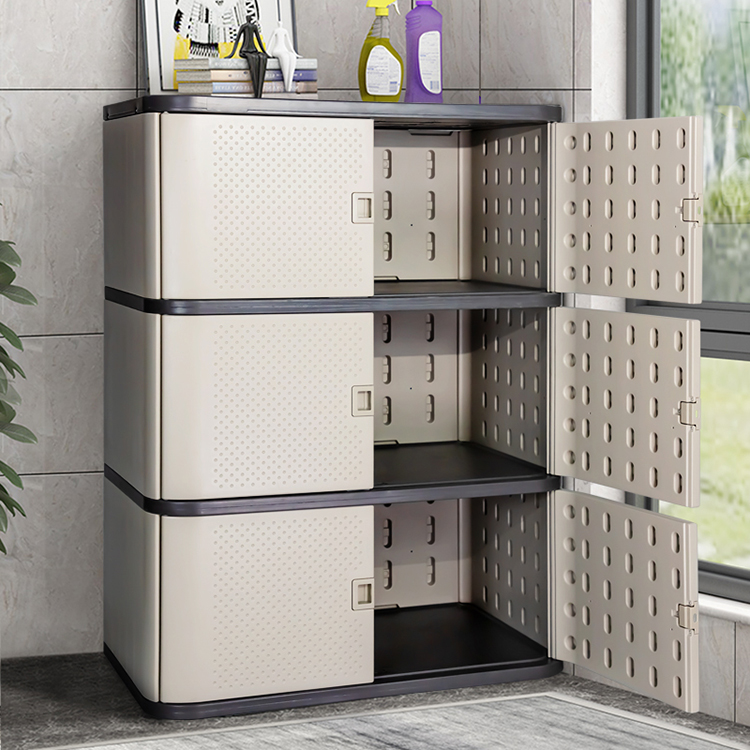
The product structure also shows that it is designed with bulk school deployment in mind. According to the product information, the single-door size is 400 x 470 x 390 mm, and the system can be combined into multi-column layouts. That makes it suitable for both compact storage and larger campus projects.
Notable technical points include:
New ABS engineering plastic construction.
Waterproof and rust-proof high-strength nylon hinge.
Side panel thickness of 22 mm.
Top panel thickness of 30 mm.
Bottom panel thickness of 30 mm.
Door panel thickness of 32 mm.
Base thickness of 80 mm.
Optional balanced top plate with added height.
Multiple color options for different school or brand needs.
These details matter because they suggest the locker is not built as a decorative product. It is built as a practical one, where thickness, hinge quality, and layout flexibility all affect long-term value.
What Schools Actually Care About
When a school evaluates a locker, the decision is usually more practical than emotional. Staff will ask whether it is easy to clean, whether students can use it quickly, and whether it will last through repeated daily handling.
Buyers often focus on five things:
Will it last under heavy use?
Is it easy to maintain?
Can it fit the available space?
Does it support the school’s phone or storage policy?
Can it be ordered in consistent bulk quality?
That is why phone lockers for schools have become a meaningful category. Many schools now need a simple way to manage mobile phones during class, and a properly designed locker system helps them do that without adding complexity.
For B2B buyers, the product must also support procurement logic. It should be easy to quote, easy to explain to customers, and easy to repeat in future orders.
Technical Advantages That Matter
The technical value of a School Locker is not just in the materials list. It is in how the structure solves common school problems.
A waterproof hinge is important because schools are not dry storage environments. Lockers are cleaned often, handled often, and used by many different people throughout the day. If the hinge fails early, the whole product loses trust quickly.
Panel thickness also matters. In real use, thicker panels usually improve stability, reduce deformation risk, and give the product a more solid feel. That matters in school purchasing, where buyers often compare products not only by price but by how “serious” they feel in daily use.
The modular design is another strong point. When multiple lockers can be combined freely, distributors and project buyers gain more flexibility. They can fit different room sizes, different student volumes, and different campus layouts without changing the product family.
In short, the product’s technical value is not one single feature. It is the combination of material, hinge, thickness, and modularity that gives it commercial strength.
How to Choose the Right Locker
Not every locker that looks suitable will actually work for school use. The right choice depends on the buying goal, the installation setting, and the end-user behavior.
If you are buying for general student storage, you should prioritize size, durability, and easy maintenance. If you are buying for device control, you should prioritize access control, compartment logic, and fast daily use. If you are buying for OEM or distribution, you should also care about color options, repeated quality, and packaging consistency.
A practical selection checklist looks like this:
Confirm the locker’s actual use scenario.
Check material strength and surface durability.
Review hinge and door structure carefully.
Make sure the dimensions fit the space.
Ask whether the design supports modular expansion.
Confirm color options and batch consistency.
Consider how easy it is to clean and maintain.
For most buyers, the mistake is not choosing the wrong category. The mistake is choosing a product that looks suitable on paper but fails in actual school operations.
Parameter Suggestions for Buyers
If you are a B2B buyer, product parameters should not be treated as abstract numbers. They should help you match the locker to the market you are serving.
Based on the product information, the following points are worth attention:
Single-door size: 400 x 470 x 390 mm.
Multi-door, multi-column combination available.
Thickness varies by panel type, which adds to the sense of structural stability.
Optional top plate can improve the overall finished look.
Color choices can support school branding or market segmentation.
For school projects, compact dimensions are often enough for personal storage and phone management. For distributors, modular combinations are more important because they make the product easier to sell across different project sizes.
If you sell to schools in different regions, color choice can also influence acceptance. Some schools prefer calm colors, while others want brighter tones for younger students or modern campus design.
Common Mistakes Buyers Make
One of the biggest mistakes is focusing too much on price. A lower price may look attractive in the first round, but if the product performs poorly, the total cost becomes higher over time.
Another common mistake is ignoring how the locker will actually be used. A product designed for general storage may not be ideal for phone lockers for schools, where access speed and routine behavior matter more.
Other frequent mistakes include:
Not checking hinge quality.
Ignoring panel thickness.
Forgetting to confirm installation space.
Choosing too many design features and not enough durability.
Overlooking whether the product is easy to clean.
Failing to think about future repeat orders.
For wholesale and OEM buyers, this is especially important. A product that is hard to explain, hard to repeat, or hard to support after sale will create unnecessary pressure on your sales team.
SEO Blog Topic Direction
If the goal is to attract B2B search traffic, the blog should sound useful first and promotional second. Buyers usually search with practical intent, not brand loyalty.
A strong SEO-friendly direction is to focus on these themes:
School Locker for bulk buyers.
Heavy Duty Plastic Lockers for schools.
Phone lockers for schools and classroom control.
Plastic locker manufacturers for OEM and wholesale sourcing.
Plastic locker selection tips for importers and distributors.
A title like School Locker Buying Guide for B2B Buyers works well because it is clear, practical, and easy to understand. It also matches the language that procurement teams and wholesale buyers are likely to use.
FAQ
What is a School Locker?
A School Locker is a storage unit used in schools for personal belongings, classroom organization, or phone control.
Why choose Heavy Duty Plastic Lockers?
They are easier to maintain, more resistant to moisture, and better suited to long-term school use.
Are Phone lockers for schools really necessary?
Yes, especially where schools want a simple way to reduce classroom distraction and manage mobile phone use.
What should B2B buyers check first?
Material quality, hinge strength, dimensions, and whether the product fits the actual school use case.
Can plastic locker manufacturers support OEM orders?
Yes. Many plastic locker manufacturers can support custom colors, modular layouts, and bulk procurement requirements.
Conclusion
A School Locker is not just a storage product. For schools and B2B buyers, it is part of the daily operational system, which means durability, structure, and ease of use matter more than decoration.
If you are sourcing for wholesale, OEM, or brand distribution, the safest choice is usually a product that combines strong materials, practical dimensions, and flexible layout options. That is exactly where well-designed Heavy Duty Plastic Lockers have an advantage.
For schools that need simple storage or phone management, the best product is the one that can stay reliable after repeated use. In the end, that is what buyers remember most: not how the locker looked on day one, but how well it worked months later.