

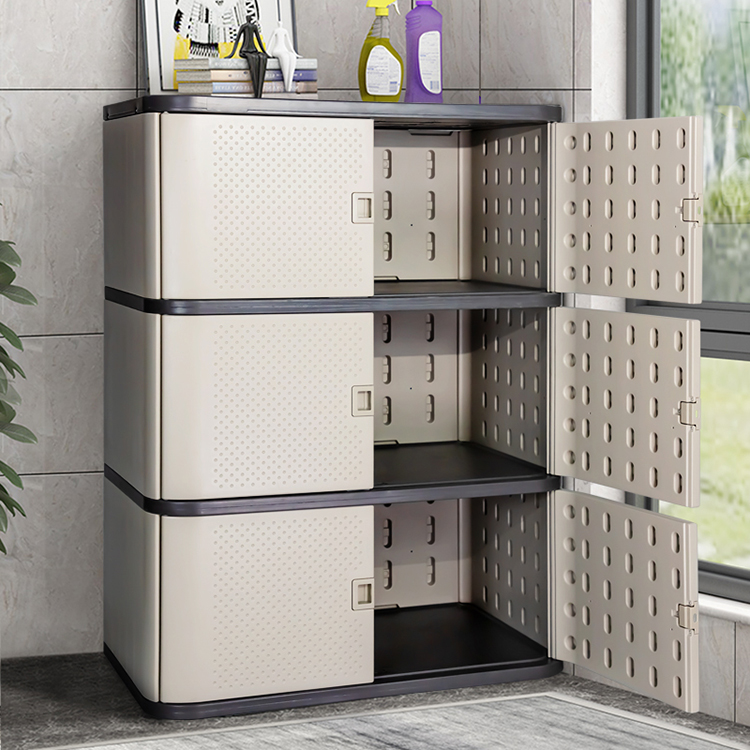
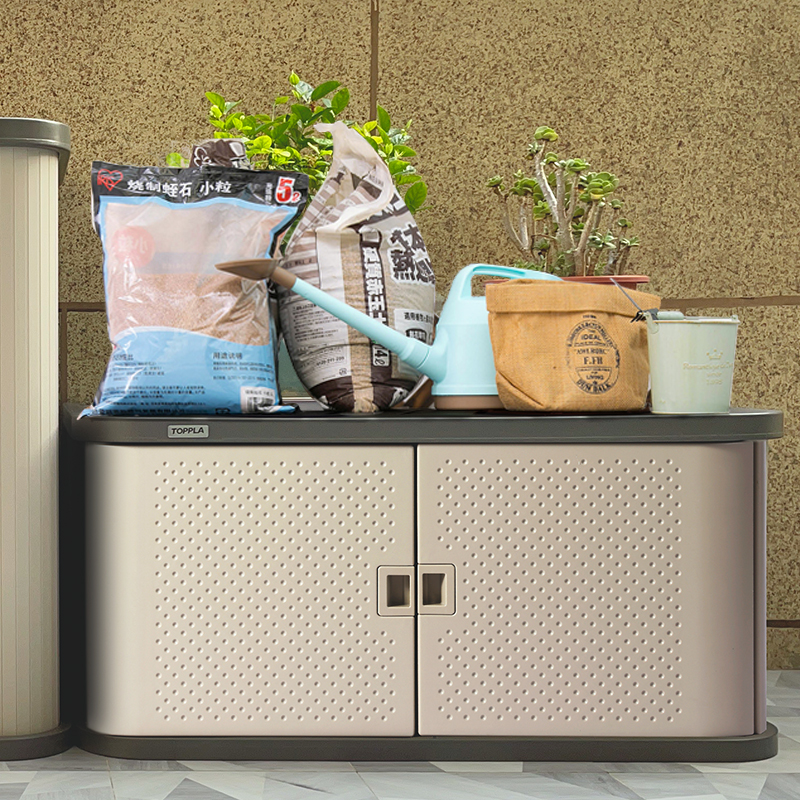
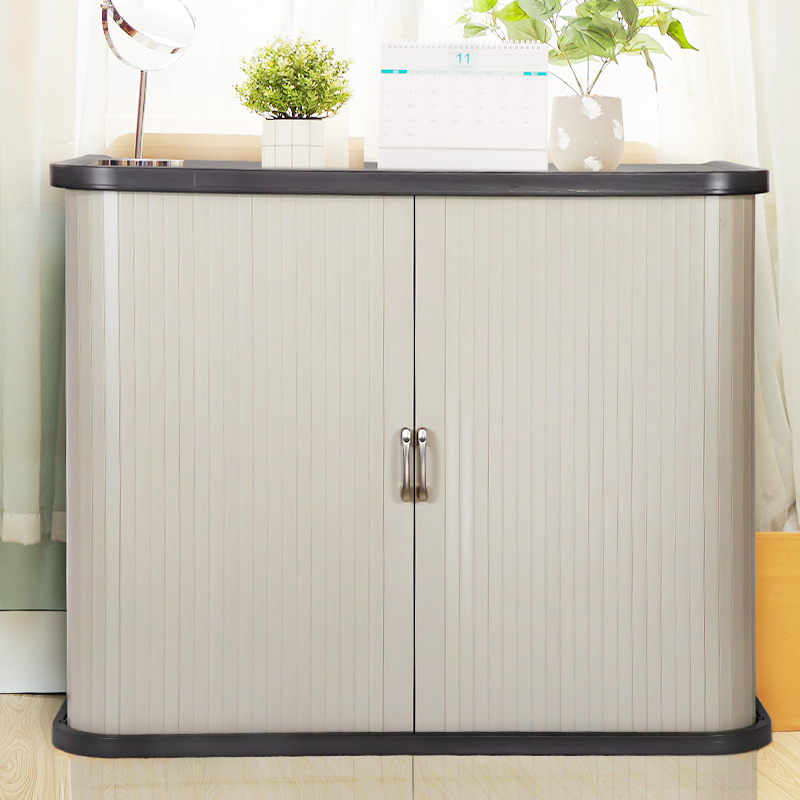
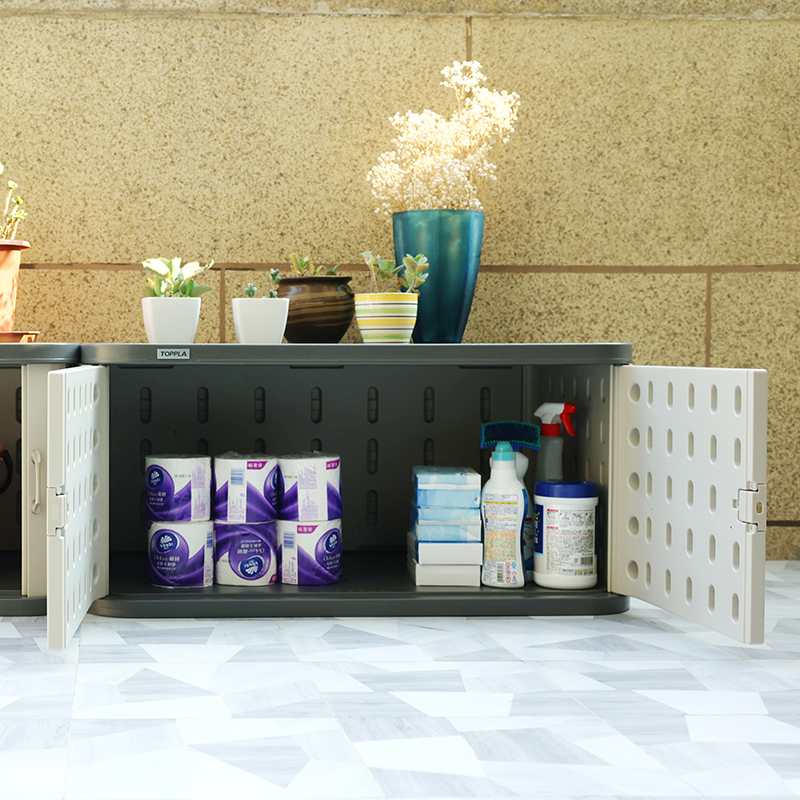
Where These Lockers Are Actually Used (Not Just “Typical Scenarios”)
Let’s skip the generic lists and talk about what really happens on-site.
Swimming Pools & Water Parks
This is probably the easiest case.
If lockers are placed anywhere near water—public pools, hotel spas, beachfront facilities—metal almost always becomes a problem. Even with coatings, it’s just a matter of time before corrosion shows up.
That’s why most modern Plastic Swimming Pools Locker projects default to HDPE lockers. They don’t try to “resist” water—they simply aren’t affected by it.
Gyms and Schools
In these places, the issue isn’t water—it’s frequency of use.
Doors get slammed. Locks get forced. Hinges wear out.
A well-built Swimming Pools Locker (even outside pool use) handles repeated daily use better because the material has slight flexibility instead of being brittle like aging metal.
Industrial Environments
Factories introduce a different kind of stress: chemicals, oils, and rough handling.
This is where Heavy Duty Filing Cabinets Plastic and locker systems start replacing metal cabinets—not because plastic is stronger in absolute terms, but because it’s more stable under those specific conditions.
The Real Pain Points (Why Buyers Switch)
From conversations with distributors and project contractors, the same issues come up again and again:
“We didn’t expect rust this fast”
Even indoor environments can have humidity levels high enough to cause corrosion over time.
“Maintenance is eating into margins”
Replacing hinges, repainting surfaces, dealing with complaints—it’s not just cost, it’s time.
“They look old too quickly”
For commercial spaces, appearance matters. Scratched, rusted lockers give a bad impression, especially in premium locations.
“We underestimated usage intensity”
What looks fine in a catalog may not survive real-world usage cycles.
These are usually the turning points where buyers begin looking at Heavy Duty Plastic Lockers.
What Actually Makes Plastic Lockers Work
Let’s be clear—plastic lockers aren’t automatically better. Cheap ones fail too.
The difference comes down to how they’re made.
Material: Not All Plastic Is Equal
High-quality lockers use HDPE (high-density polyethylene). It’s dense, stable, and doesn’t react much to moisture or chemicals.
Lower-grade plastic (often recycled) can feel similar at first but tends to become brittle over time.
Structure Matters More Than You Think
A locker’s lifespan isn’t just about material—it’s about design:
Door thickness
Internal support
Hinge quality
A well-structured Cabinets Plastic Swimming Pools Locker system distributes stress evenly, which is why it holds up better over time.
Flexibility vs Rigidity
This is something many buyers don’t consider.
Metal is rigid. When it deforms, it stays deformed.
Plastic has slight flexibility. It absorbs impact better, which actually reduces long-term damage in high-traffic environments.
How to Choose (Without Overcomplicating It)
If you’re sourcing lockers in bulk, here’s a straightforward way to think about it.
Step 1: Start With the Environment
Ask yourself:
Is there moisture or water exposure?
Is it indoor or outdoor?
Will chemicals be involved?
If the answer to any of these is “yes,” plastic is usually the safer option.
Step 2: Check the Material Source
Don’t just ask “HDPE or not.” Ask:
Virgin material or recycled?
Any UV stabilization added?
These details directly affect lifespan.
Step 3: Look Beyond the Surface
Two lockers can look identical in photos but perform very differently.
If possible, check:
Panel thickness
Door alignment
Locking mechanism
Step 4: Think About Your Market
If you’re an importer or brand owner, consider what your customers expect:
Do they prioritize durability?
Are aesthetics important?
Is customization needed?
Practical Parameter Suggestions (From Real Orders)
Instead of theoretical specs, here’s what’s commonly used in actual projects:
Panel thickness: around 8–10mm for most commercial use
Load capacity: 50–70kg per compartment
UV protection: essential for outdoor or semi-outdoor use
Waterproof structure: non-negotiable for Swimming Pools Locker installations
These aren’t strict rules, but they’re a reliable baseline.
Mistakes That Happen More Often Than You’d Think
Going Too Cheap
This is probably the most common one.
Lower prices usually mean lower material quality. The problem only shows up after installation—when replacement becomes much more expensive.
Assuming All Plastic Lockers Are the Same
They’re not.
There’s a big gap between entry-level products and true Heavy Duty Plastic Lockers.
Not Planning for Expansion
Projects grow. If your locker system isn’t modular, adding more units later can become complicated.
Choosing Suppliers Without Verifying Experience
Consistency matters in bulk orders. Small variations can turn into big problems at scale.
Quick Buyer Questions (Straight Answers)
Are plastic lockers strong enough?
Yes—if they’re properly designed and use high-quality HDPE. Many industrial projects already rely on them.
Do they fade in the sun?
Good ones don’t, because they include UV stabilizers.
How long do they last?
In most cases, 10+ years is realistic. In controlled environments, even longer.
Are they only for wet areas?
No. They’re widely used in dry environments too, especially where durability and low maintenance are priorities.
FAQ
1. Can I customize lockers for my brand?
Yes, including size, color, and logo. Most manufacturers support OEM/ODM.
2. Are plastic lockers more expensive than metal?
Initial cost can be similar or slightly higher, but total cost over time is usually lower.
3. What locking options are available?
Key locks, combination locks, RFID, and smart locks are all compatible.
4. Are they suitable for outdoor use?
Yes, as long as UV-resistant materials are used.
5. Do they require special maintenance?
No. Basic cleaning is usually enough.