

The First Question Is Not the Price
When a new buyer asks for office lockers, the first question is usually price. That makes sense. In B2B orders, quantity can be large, and budget matters.
But price is not where I like to start.
I usually want to know where the locker will be used.
A clean corporate office?
A warehouse entrance?
A factory changing room?
A gym area?
A hospital staff room?
A coworking space?
The answer changes everything.
For example, an office locker cabinet used for laptops and handbags in a dry office does not need the same structure as a staff locker used for safety shoes, uniforms, and helmets. A locker in a gym needs airflow. A locker in a warehouse needs simple lock management. A locker in a premium office needs a clean appearance and quiet door movement.
Same keyword. Different job.
That is where many buyers get caught. They search for “office locker,” compare a few similar-looking models, then choose the one that looks best on paper. Later, the real site tells a different story.
Metal Lockers Are Familiar, But Not Always Friendly
Metal lockers are still common. Many contractors use them. Many buyers know them. For a dry office with light use, they can work.
The problem starts when the room is not perfectly dry or the locker gets used heavily.
We have seen metal staff lockers start rusting from the bottom edge, hinge area, or around the lock. Sometimes it happens after scratches. Sometimes the room has more moisture than the buyer expected. Sometimes cleaning water reaches the base every day. At first, it is just a small mark. Later, the paint lifts and the whole row looks old.
Dents are another issue. Once a metal door gets hit, the dent usually stays there. In a staff room, that makes the space look poorly maintained even if the company cleans it regularly.
That is one reason more companies now ask for plastic locker options.
A plastic locker does not rust like metal. It is usually easier to wipe down. It is quieter in daily use. For offices, staff rooms, gyms, factories, warehouses, schools, hospitals, and commercial buildings, these small advantages matter after months of use.
Not every plastic locker is good, though. A thin panel can feel cheap. A weak hinge area can become loose. A poor lock choice can create daily headaches. So the buyer still needs to check the details.
ABS or HDPE? It Depends on the Room
Buyers often ask whether ABS plastic lockers or HDPE plastic lockers are better.
The honest answer is: better for what?
ABS works well in many clean indoor offices. It has a neat surface, looks professional, and usually fits office employee lockers, office storage locker projects, and general staff storage. If the space is dry and the daily use is normal, ABS can be a sensible choice.
HDPE is tougher. I would look at HDPE first when the locker goes into a humid staff room, gym, factory, warehouse, school changing area, or any place where people may handle the doors more roughly.
The simple rule is easy:
Use ABS for clean, dry office areas.
Use HDPE for wetter, busier, or tougher areas.
Of course, every project has its own details. But this rule prevents a lot of wrong purchases.
One buyer once asked why we did not recommend the cheaper ABS model for a staff changing room. The reason was simple: employees were storing work shoes, uniforms, and wet umbrellas. The room was on the ground floor. Cleaning water reached the area often. Saving a little money on material would probably create complaints later.
That is not a good saving.
A Nice-Looking Locker Can Still Be Wrong
A product photo can hide many things.
It does not show how wide the room is.
It does not show whether people use the locker at the same time.
It does not show if the floor is often wet.
It does not show whether the staff store shoes, food, towels, or helmets.
We once saw an office project where the lockers looked clean after installation, but employees did not like the area. The locker row was placed beside a narrow passage. Every morning, several people opened doors at the same time. Others had to wait or squeeze past.
The locker was not broken. The layout was wrong.
This happens more often than people think. For office locker projects, buyers should check the user flow before confirming the final size and layout. Door opening space, walking space, wall fixing, and cleaning access all matter.
A good office locker supplier should ask about these things. If a supplier only sends a price list and says “best quality,” that is not enough for a real project.
Staff Rooms Need More Than a Clean Door
Corporate offices care about appearance. Staff rooms care about survival.
That may sound rough, but it is true.
In staff rooms, people store shoes, uniforms, gloves, helmets, rain jackets, bags, and lunch boxes. Some items are dirty. Some are damp. Some have odor. Doors are opened quickly before shifts and after work. Users are not always gentle.
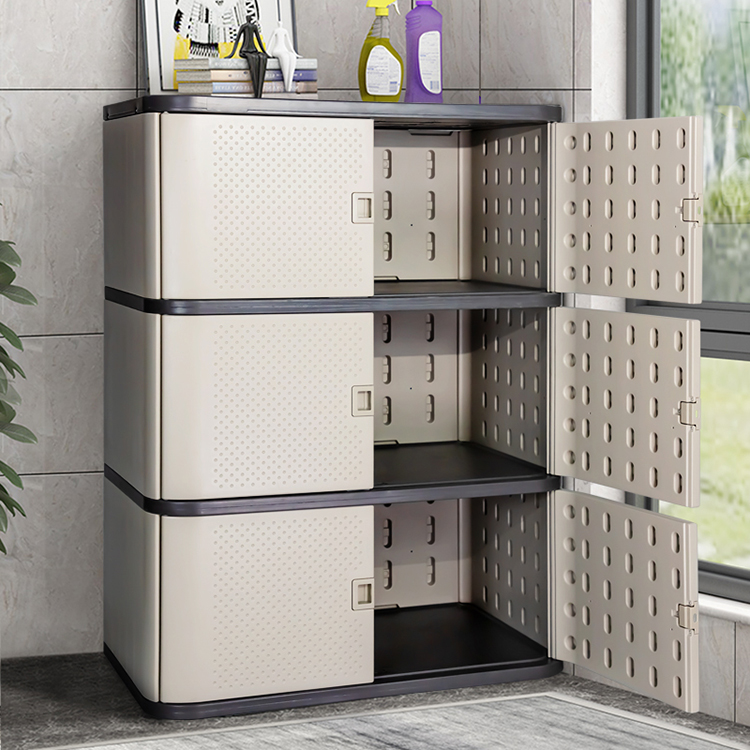
A fully closed smooth door may look great in a catalog. But if staff store shoes and uniforms inside, poor ventilation becomes a problem. The room can start to smell. Cleaning staff may get blamed, but the real issue is the locker design.
For staff lockers, ventilation is not decoration. It is part of the function.
The door also needs to feel stable. If the sample door shakes, mass production will not magically fix that feeling. Buyers should open and close the sample several times. Press the panel. Check the lock area. Look at the hinge. It takes five minutes, but it can avoid many complaints later.
Lock Choice Is Not Just About Security
A lock is a small part, but it can cause a surprising amount of trouble.
Key locks are simple, but keys get lost.
Combination locks avoid keys, but users forget codes.
Digital locks look modern, but batteries and reset codes need management.
RFID locks are convenient, but they need system support.
Padlock hasps are not beautiful, but they work well in many factories and warehouses.
So the best lock is not always the most expensive one. It is the one the workplace can manage every day.
For a coworking space, digital code locks may be useful because users change often. For a warehouse, a simple padlock hasp may be more practical. For a corporate office, the buyer may care more about a clean look and quiet use.
This is why office locker manufacturers should offer different lock options instead of pushing one solution for every customer.
Packaging Can Ruin a Good Product
This part is boring, but importers and distributors should pay close attention to it.
An office locker may leave the office locker factory in good condition. Then it goes through truck loading, container shipping, unloading, warehouse handling, and local delivery. If the carton is weak, the product may arrive with scratches, cracked corners, loose doors, or missing accessories.
The customer will not care that the locker was fine before shipping. They care about what arrives.
We have seen this happen. The product passed inspection, but the corner protection was not enough. After shipping, several cabinets had visible damage. The buyer had to handle claims, photos, replacement parts, and customer complaints.
That is why export packaging should be discussed before production.
Ask about carton strength.
Ask about corner protection.
Ask about protective film.
Ask about accessory packing.
Ask about labels and installation instructions.
Ask whether pallet packing is needed.
Good packaging does not sound exciting. But it protects the order.
What Specs Should Buyers Talk About?
Different models have different specifications, but for office plastic lockers, buyers usually discuss these points early:
Material: ABS engineering plastic or HDPE
Door thickness: often around 8–12 mm, depending on the model
Load capacity: often around 40–60 kg per compartment for common staff storage
Structure: single-door, two-tier, multi-door, phone locker, or wardrobe style
Lock type: key lock, padlock hasp, combination lock, digital lock, RFID lock
Customization: color, size, logo, numbering, label holder, shelves, ventilation, packaging
These numbers should not be treated as one fixed rule. A locker for phones does not need the same structure as a locker for helmets and work shoes. A locker for a dry office does not need the same material as a locker for a humid gym area.
The project decides the product.
OEM and ODM: Small Details Matter Most
Many B2B buyers ask for OEM or ODM office lockers. Usually, customization starts with small details, not a completely new design.
Color matching.
Logo printing.
Number plates.
Lock changes.
Label holders.
Ventilation patterns.
Internal shelves.
Phone compartments.
Carton marks.
User manuals.
These are common and usually manageable.
Bigger changes are different. A new size, new door structure, or special internal layout may need mold discussion, higher MOQ, and more sample time. A serious office locker factory should explain this clearly instead of promising everything too fast.
For importers and distributors, this matters. You need a product that can be repeated, packed safely, and supplied with consistent color and accessories. A one-time sample is easy. A stable product line is harder.
Common Buying Mistakes
Some mistakes show up again and again.
The buyer chooses only by price. Later, the lock fails, the door feels weak, or the product arrives damaged.
The buyer uses one model everywhere. The same locker goes into office areas, staff rooms, gyms, and warehouses. It works in one place and fails in another.
The buyer forgets ventilation. After installation, shoes and uniforms create odor.
The buyer chooses a digital lock because it looks modern, but nobody wants to manage batteries and reset codes.
The buyer does not check packaging. The factory ships the goods, and the damage appears after arrival.
None of these mistakes are strange. They happen in normal projects. The point is to catch them before the order is confirmed.
FAQ About Office Plastic Lockers
1. Are plastic office lockers strong enough?
Yes, if the material and structure match the application. ABS works well for many dry indoor offices. HDPE is better for humid, busy, or rougher staff storage areas.
2. Which is better for office use, ABS or HDPE?
ABS is usually better for clean indoor offices where appearance and cost matter. HDPE is better for gyms, staff rooms, factories, warehouses, and humid areas.
3. Do plastic lockers look professional?
Yes. Modern plastic lockers can look clean and suitable for corporate offices, especially when the color, door style, and lock type are chosen properly.
4. Are plastic staff lockers easy to clean?
Usually, yes. Most plastic lockers can be wiped with a damp cloth. They also do not rust like metal lockers.
5. Can office plastic lockers use electronic locks?
Yes. Many office locker cabinet designs can support electronic locks, keypad locks, RFID locks, or mechanical locks.
6. Can an office locker manufacturer customize the product?
Yes. Common customization includes size, color, logo, lock type, numbering, label holder, shelves, ventilation design, and export packaging.
7. Are plastic lockers more expensive than metal lockers?
Sometimes the first price is similar or slightly higher. But plastic lockers can reduce maintenance cost because they do not rust, dent, or need repainting like metal lockers.
Final Note
Plastic office lockers are not popular only because they look newer than metal lockers. They solve real workplace problems: rust, dents, cleaning, odor, noise, and maintenance.