

Why School Locker Selection Is Different from Normal Furniture Buying
A School Locker is used roughly, often by hundreds or thousands of students. It is not handled like home furniture. Students open doors with one hand while holding books. Bags are pushed inside quickly. Shoes, wet towels, sportswear, water bottles, lunch boxes, and electronics may all end up in the same cabinet.
In some schools, lockers sit in dry corridors. In others, they stand beside swimming pools, gym showers, outdoor walkways, or coastal campuses where moisture is always present. The same product cannot perform equally well in every location.
We’ve seen buyers order one standard locker model for the whole campus because it made procurement easier. After installation, the classroom corridor was fine, but the sports changing room became a headache. The lockers were not ventilated enough, the cleaning team complained about odor, and the school had to replace part of the project earlier than expected.
That is why school locker selection should start from the actual use scene.
Before talking about color, price, or quantity, buyers should ask:
Where will the locker be installed?
Who will use it?
What items will be stored inside?
Is the area dry, wet, or semi-outdoor?
How often will the locker be used every day?
Will the school manage keys, codes, or RFID cards?
Will students move between classes quickly in that area?
Can the cleaning team access the locker bottom and surrounding space?
These are basic questions, but they prevent expensive mistakes.
Why Many Schools Choose Plastic Lockers Now
Traditional steel lockers are still common. They are familiar, easy to compare, and often look cheaper in the first quotation. For dry indoor areas with moderate use, they can still work.
The problem starts when the environment is humid, crowded, or rough.
Metal lockers may rust. Paint can peel. Dents are hard to repair neatly. Door noise can become annoying in busy corridors. If the locker is damaged, sharp edges may appear. In swimming pools, gyms, coastal schools, and shower areas, rust is often not a question of “if.” It is more a question of “when.”
This is one reason more schools and project buyers now consider plastic lockers.
HDPE plastic lockers are widely used for wet, high-traffic, and heavy-use environments because HDPE has strong resistance to water, corrosion, and impact. ABS plastic lockers are also used in many indoor school and office areas, especially where buyers need a clean appearance, lighter structure, and controlled budget.
Here’s the honest part. Plastic lockers are not all the same. A cheap plastic locker made with weak material or poor structure can still fail. Buyers should not hear the word “plastic” and assume everything is waterproof, durable, and suitable for school use.
Material matters. Thickness matters. Door structure matters. Lock position matters. Packaging matters too.
HDPE Plastic Lockers: Where They Make Sense
HDPE plastic lockers are usually a strong choice for school projects where moisture, impact, and long-term use are important.
We often recommend HDPE for:
School gym changing rooms
Swimming pool locker rooms
Sports centers
Dormitory storage areas
Outdoor or semi-outdoor corridors
Coastal schools
High-traffic student areas
Industrial training centers
Wet-area staff rooms
The biggest advantage is not only that HDPE resists water. It also performs well in places where lockers are used without much patience. Students do not gently open and close doors every time. Cleaning teams may wash floors often. Sports equipment may hit the locker surface. Wet shoes may be stored inside for hours.
In these cases, HDPE plastic lockers usually give the buyer fewer maintenance problems than metal lockers.
One issue we have seen in overseas projects is door deformation caused by poor material selection or thin door panels. The buyer thought all HDPE lockers were similar because the quotation used the same keyword. After shipment and installation, the door gap became uneven. The root cause was not “HDPE” itself. It was the structure and production control behind it.
So when buyers compare HDPE plastic lockers, they should ask about panel thickness, door reinforcement, hinge design, UV resistance if needed, and packaging protection.
ABS Plastic Lockers: Better for the Right Indoor Projects
ABS plastic lockers can be a practical option for schools, offices, training centers, and staff rooms where the environment is mostly dry and the usage pressure is not extreme.
ABS lockers often have a clean surface and neat appearance. They can work well in teacher rooms, office areas, classroom support areas, and light-to-medium student storage zones.
For buyers who want office plastic lockers or school plastic lockers with a simple look and reasonable cost, ABS may be suitable.
But this is where buyers need to be careful.
ABS plastic lockers are not always the best choice for swimming pools, shower rooms, outdoor corridors, or very rough student areas. If the project has strong sunlight, high humidity, frequent impact, or cleaning chemicals, the buyer should check the material grade and application limits very clearly.
A locker can look good in a sample room and still be wrong for the final site.
We’ve seen this problem with school furniture many times. The sample passes visual inspection. Everyone says, “Looks good.” Then the product is installed in a wet or hot area, and after a few months the complaint starts. Color changes. Doors feel less stable. Surface scratches become more visible.
That does not mean ABS is bad. It means ABS should be used in the right place.
Heavy Duty Plastic Lockers for High-Frequency School Use
Some school areas are just harder on lockers.
Gym rooms. Dormitories. Boarding schools. Public training centers. Sports facilities. Large campuses with thousands of students.
In these places, heavy duty plastic lockers are usually safer than light-duty cabinets. The daily opening frequency is higher. The chance of impact is higher. Lock damage is more likely. Students may store heavy backpacks, helmets, shoes, uniforms, and sports gear together.
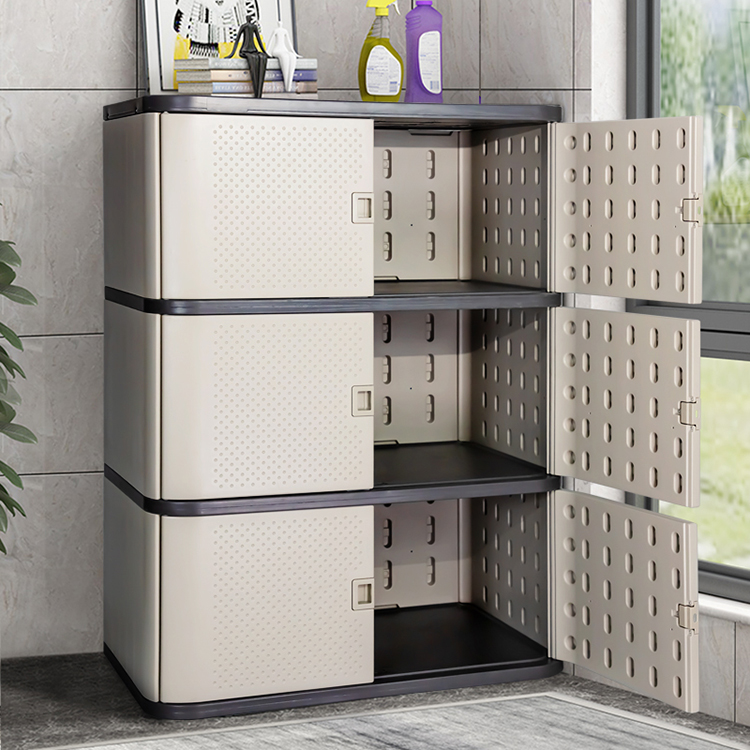
A heavy duty plastic locker should have stronger door panels, stable body structure, reliable hinge support, good ventilation, and lock compatibility.
Do not judge heavy duty only by the words in the catalog. Ask for actual details.
For example:
How is the door supported?
Is the hinge area reinforced?
Will the door stay aligned after repeated opening?
Can the locker row stay stable after installation?
Is the base easy to clean?
Can the lock area resist pulling or rough use?
Does the packaging protect the door corner during container shipment?
These questions sound simple, but they reveal the supplier’s real understanding of school projects.
Common School Locker Applications
Classroom Corridors
Corridor lockers usually store books, bags, jackets, laptops, and daily student items. The biggest issue is space planning.
If the locker is too deep, the corridor becomes crowded. If the locker is too small, students cannot use it properly. If the door swing is not considered, students block each other during class changes.
For younger students, lower locker heights are usually easier. For high school students, larger storage space may be needed. For universities, lock security and durability become more important.
In corridor projects, we usually pay attention to:
Locker depth
Door opening direction
Corridor width
Student traffic flow
Wall fixing
Numbering system
Grade-based color planning
Fire escape clearance
We’ve seen projects where the locker product was acceptable, but the layout was wrong. After installation, the school found that students had to stand sideways when opening doors in a narrow corridor. That is not a product quality issue. It is a planning issue.
Gym Changing Rooms
Gym lockers deal with sweat, wet clothes, shoes, uniforms, bags, and sometimes rougher use. Ventilation becomes more important here than many buyers expect.
A closed locker may look tidy, but poor airflow can create odor. Once odor becomes a daily complaint, the school has to spend more time cleaning and managing the area.
For gym areas, HDPE plastic lockers or heavy duty plastic lockers are usually a better match than ordinary office-style lockers.
Good gym lockers should offer:
Moisture resistance
Stronger doors
Good ventilation
Easy cleaning
Stable base
Rust-free structure
Lock options suitable for students or visitors
One small detail: the locker bottom matters. If the base traps dirt or water, cleaning becomes difficult. This is often noticed only after installation.
Swimming Pool and Shower Areas
Swimming pool lockers are one of the clearest cases for HDPE plastic lockers.
Metal lockers may rust. Wood may swell. Low-grade plastic may fade or become brittle if the material is not suitable. The locker must handle wet floors, damp towels, water vapor, cleaning chemicals, and sometimes sunlight.
For wet areas, buyers should check:
Water resistance
UV resistance if there is sunlight
Ventilation
Drainage around the locker area
Lock material
Hinge structure
Cleaning chemical resistance
Anti-rust hardware
This is not a place where the buyer should simply choose the cheapest locker.
We’ve seen rust complaints appear very quickly in wet changing rooms when buyers used ordinary painted steel lockers. At first, the project saved money. Later, maintenance and replacement cost more than the original saving.
Teacher Rooms and Staff Areas
Teacher rooms and staff areas usually need a cleaner and more professional appearance. Storage items may include bags, documents, laptops, lunch boxes, uniforms, or personal belongings.
Here, office plastic lockers can work very well. The design can be quieter, cleaner, and more furniture-like. The locker does not always need the strongest heavy-duty structure, but it should still be stable and easy to clean.
For staff areas, buyers often care about:
Privacy
Lock reliability
Internal shelf space
Clothes hanging space
Color matching
Quiet door movement
Name tag or number label
Long-term appearance
In many school projects, using different lockers for student areas and staff areas gives a better result than forcing one design across the whole campus.
Dormitories and Boarding Schools
Dormitory lockers are different again. Students store belongings for a longer time. Privacy matters more. The locker may hold clothes, shoes, electronics, books, bedding, or personal items.
For dormitory use, buyers usually need larger capacity and stronger security.
A practical dormitory locker may include:
Full-height storage
Internal shelf
Hanging rod
Shoe space
Ventilation
Stronger lock system
Anti-tamper door structure
Durable hinge area
Lock choice becomes very important here. Key locks are simple, but keys get lost. Combination locks avoid keys, but students forget codes. Digital locks are convenient, but batteries and management rules must be planned.
No lock system is perfect. The right lock is the one the school can manage every day.
Product Parameters Buyers Should Confirm
A proper school locker inquiry should not only say, “Please quote plastic lockers.”
That is too vague.
A better inquiry gives the supplier enough information to recommend the right structure and material.
Buyers should confirm:
Product use area: classroom, corridor, gym, dormitory, pool, staff room
Material: HDPE, ABS, or other plastic material
Locker structure: single-tier, two-tier, three-tier, six-door, wardrobe type
Size: height, width, depth
Door design: solid door, ventilated door, label holder
Lock type: key lock, padlock hasp, combination lock, RFID lock, digital lock
Color: standard color or custom school color
Logo: printed logo, label, or molded branding
Installation method: freestanding, wall-fixed, floor-fixed, modular row
Packaging: carton, pallet, corner protection, export packing
Quantity and delivery schedule
Required certification or test standard, if any
For importers and distributors, these details affect not only the first order but also repeat sales. If the locker model is stable, color is consistent, and packaging is reliable, it becomes easier to build a long-term product line.
Manufacturing Details That Often Decide Quality
A school locker may look simple after assembly. But factory control behind the product is what decides whether the locker stays stable after shipping and daily use.
Material Control
The factory should use the right material for the right application. HDPE for wet and heavy-use areas. ABS for suitable indoor areas. If UV exposure is expected, that should be discussed early.
Material color should also be controlled carefully. For large school projects, color difference between batches can look very obvious after installation.
We’ve seen buyers receive lockers from mixed batches where the color looked slightly different under indoor lighting. Not a huge quality failure, but enough to make the project look unprofessional.
Door and Hinge Assembly
Doors are where many problems start.
A weak hinge area can make the door loose. Poor gap control makes the locker look cheap. A badly positioned lock hole can make daily use annoying. If the door does not close smoothly, students will force it, and the problem gets worse.
During production, the supplier should check door alignment, hinge stability, lock position, and opening feel.
Lock Compatibility
The lock is small, but it creates many after-sales problems.
A school may order hundreds or thousands of lockers. If the lock system is not easy to manage, the school staff will complain later.
Before placing the order, buyers should consider:
How many users will share the lockers?
Will students keep the same locker all year?
Will the locker be used temporarily?
Who manages lost keys?
Can the school reset codes?
Are spare locks available?
Is the lock suitable for wet areas?
A lock chosen only by price can become the most annoying part of the project.
Export Packaging
This part is often ignored until damage happens.
Plastic lockers may be lighter than metal lockers, but they still need proper protection during long-distance shipping. Container loading, vibration, stacking pressure, and forklift handling can damage corners, doors, locks, or surface finish.
We’ve seen good products arrive with damaged corners because the carton was too weak. The buyer then thinks the product quality is poor, even though the real problem was packaging design.
For export orders, buyers should ask about:
Carton strength
Corner protection
Pallet packing
Product labeling
Spare parts packing
Installation manual
Loading method
Protection for doors and locks
For B2B importers, packaging is part of product quality. Your customer sees the package before they see the locker.
Common Mistakes Buyers Make
Choosing Only by Price
Large school projects can be price-sensitive. That is normal. But choosing the lowest price without checking material, thickness, lock quality, and packaging often creates higher costs later.
A low-price locker that fails early is not cheap.
Ignoring the Installation Environment
A locker for a dry classroom corridor is not the same as a locker for a swimming pool changing room. Use environment should decide material and structure.
Forgetting Ventilation
Ventilation is not a decoration. It affects odor, hygiene, and cleaning work. Gym, dormitory, and sports lockers need good airflow.
Using the Wrong Lock System
Different school users need different lock systems. Younger students may need simple keys or padlocks. Universities may prefer digital or RFID locks. Visitor lockers may need temporary-use locks.
The wrong lock creates daily management trouble.
Not Checking Door Stability
The door is used most often. If the door feels weak in the sample, it will not become better after mass production.
Ignoring Packaging
Many locker complaints are not caused by the material itself. They come from shipping damage. Export packaging should be discussed before order confirmation, not after damage occurs.
How Importers and Distributors Can Sell School Plastic Lockers Better
For importers and distributors, school plastic lockers can be positioned as a practical alternative to traditional metal lockers, especially for schools that care about maintenance and wet-area performance.
But the selling message should be specific.
Do not only say:
“Our lockers are strong, waterproof, and durable.”
Every supplier says that.
A better message is:
“For gym changing rooms and swimming pool areas, HDPE plastic lockers help schools reduce rust, odor, repainting, and wet-area maintenance problems.”
That sentence speaks to a real buyer problem.
For B2B SEO, product pages and blogs can target keyword groups such as:
School Locker
school plastic lockers
HDPE plastic lockers
ABS plastic lockers
heavy duty plastic lockers
office plastic lockers
plastic locker manufacturer
school locker supplier
OEM plastic locker manufacturer
plastic lockers for schools
waterproof lockers for school changing rooms
plastic lockers for dormitories
gym plastic lockers for schools
Buyers searching these terms are usually not just reading casually. Many of them are comparing suppliers, preparing tenders, building product catalogs, or looking for OEM and ODM manufacturing support.
So the page should sound like a supplier who understands projects, not just a seller showing product photos.
OEM and ODM Options for School Locker Buyers
Many brands, distributors, and project contractors need more than standard lockers. They need products that match their local market.
OEM and ODM customization may include:
Locker size
Door color
Body color
Logo
Label holder
Number plate
Lock type
Ventilation pattern
Shelf layout
Packaging design
User manual
Carton mark
Product label
Project-based configuration
Small customization, such as color, logo, lock type, or packaging, is usually easier to manage. Full structure changes may require mold discussion, higher MOQ, and longer sample time.
This is where communication with the factory becomes important.
A serious buyer should share the project environment, target market, required price level, quantity plan, and expected sales channel. With that information, the manufacturer can recommend a more realistic product solution.
Quick Buyer Checklist Before Ordering
Before confirming a School Locker order, buyers can use this checklist.
Is the locker for students, teachers, staff, or visitors?
Will it be used indoors, outdoors, or in a wet area?
Should the material be HDPE or ABS?
Does the project need heavy duty plastic lockers?
How much storage space does each user need?
Is ventilation required?
What lock system is easiest for the school to manage?
Does the school need custom colors or logos?
Can the supplier keep color consistent for repeat orders?
Is the export packaging strong enough?
Are spare locks and accessories available?
Can the supplier support OEM or ODM requirements?
This checklist looks basic, but it helps buyers avoid many common mistakes.
FAQ About School Locker Buying
1. What material is best for a School Locker?
For wet areas, high-traffic corridors, gyms, and dormitories, HDPE plastic lockers are usually a strong choice. For dry indoor areas, ABS plastic lockers can also work well when the use intensity is moderate and the buyer wants a clean appearance with controlled cost.
2. Are plastic lockers suitable for schools?
Yes. Plastic lockers are suitable for schools, especially when buyers need rust resistance, moisture resistance, easy cleaning, safer edges, and lower maintenance. The key is choosing the right plastic material and structure for the actual school area.
3. Are HDPE plastic lockers better than metal lockers?
In wet or humid environments, HDPE plastic lockers usually perform better than metal lockers because they do not rust. In dry areas, metal lockers can still be used, but schools should compare long-term maintenance cost, not only the first purchase price.
4. Where should ABS plastic lockers be used?
ABS plastic lockers are suitable for dry indoor spaces such as classrooms, teacher rooms, office areas, and light-to-medium student storage areas. They are not always the best option for wet, outdoor, or very rough environments.
5. What are heavy duty plastic lockers used for?
Heavy duty plastic lockers are used in high-frequency environments such as school gyms, dormitories, sports centers, swimming pools, industrial training centers, and busy changing rooms. They are designed for stronger impact resistance and longer service life.
6. Can school plastic lockers be customized?
Yes. Buyers can customize size, color, logo, lock type, label holder, numbering, ventilation design, internal layout, and packaging. OEM and ODM customization is common for importers, distributors, and project contractors.
7. What lock is best for school lockers?
There is no single best lock for every school. Key locks are simple. Padlock hasps are flexible. Combination locks avoid key loss. RFID and digital locks are convenient but need better management. The right choice depends on student age, school rules, and maintenance ability.
8. How should importers choose a school locker manufacturer?
Importers should check material quality, production stability, door structure, lock options, sample quality, packaging strength, customization ability, delivery control, and after-sales support. A real manufacturer should understand project use, not only product quotation.
Final Thoughts
A School Locker is a small product in a large campus project, but it creates daily contact with students, teachers, cleaners, and facility managers. If the locker is wrong, people notice quickly.
For dry indoor areas, ABS plastic lockers and office plastic lockers can be practical. For gyms, swimming pools, dormitories, coastal schools, and heavy-use student areas, HDPE plastic lockers and heavy duty plastic lockers are usually safer long-term choices.
The best locker decision starts from the use scene. Not the catalog photo. Not only the lowest price.
When buyers understand the environment, user behavior, lock management, ventilation needs, and shipping risks, choosing the right school plastic locker becomes much easier. For importers, distributors, and OEM/ODM buyers, this is also where a professional plastic locker manufacturer can create real value — not by selling a cabinet, but by helping the buyer avoid problems before they happen.