

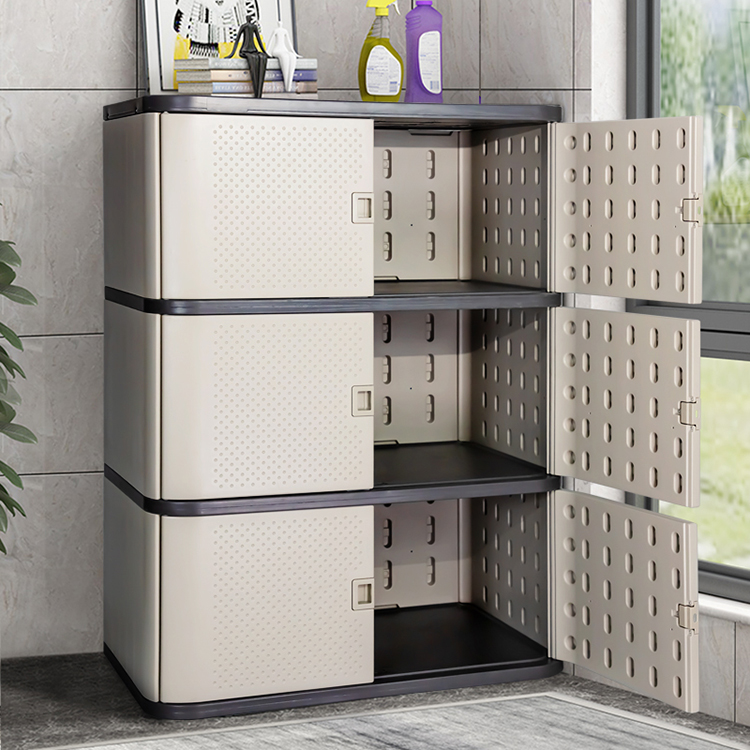
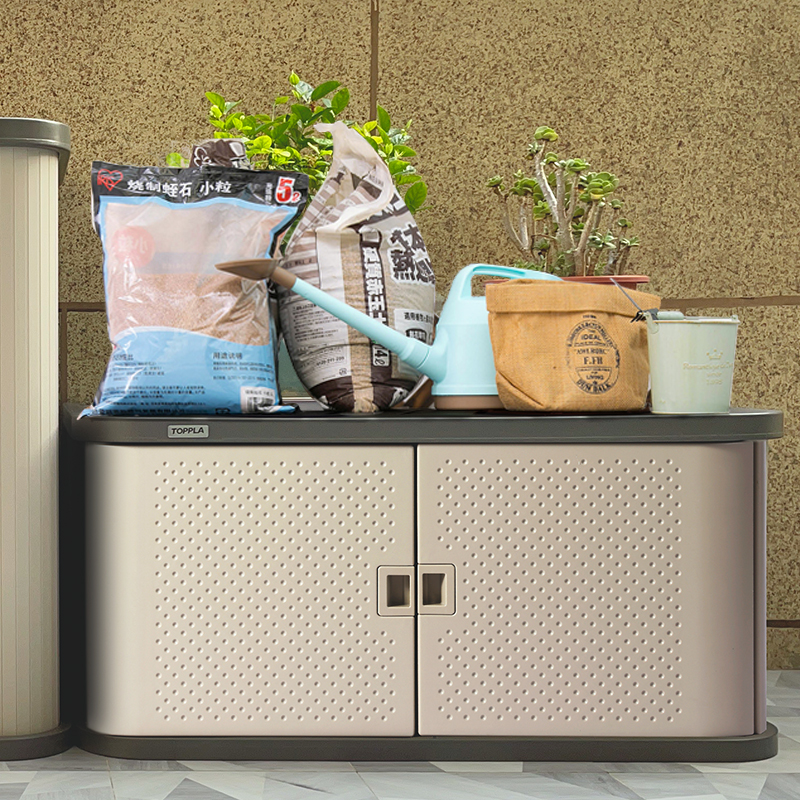
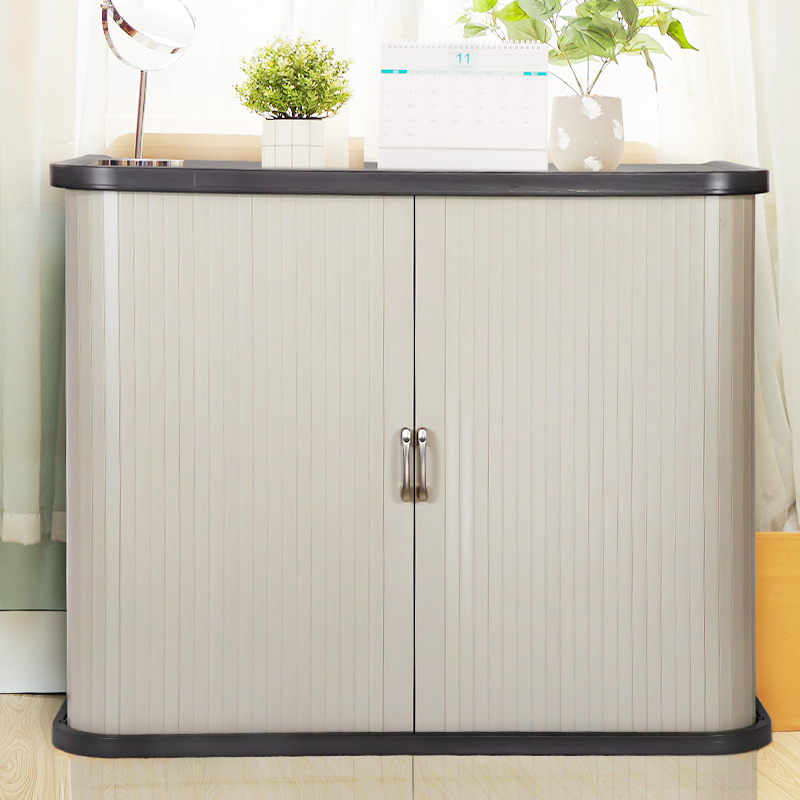
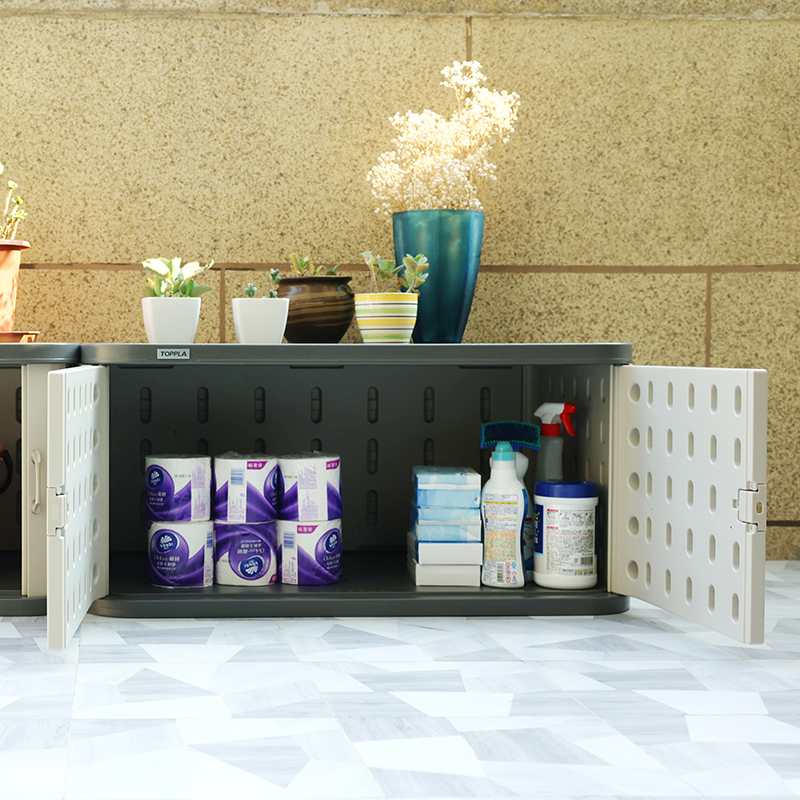
What a plastic locker really is
A plastic locker uses durable polymer materials, most often HDPE, to create a storage unit that resists water, corrosion, and everyday wear. In the strongest versions, the body, door frame, and door components use thick solid plastic rather than thin hollow panels. ASI describes its Unibody HDPE construction as a single-piece side and back structure with a machined HDPE door frame for rigidity, while its Pro Locker line uses thick HDPE parts, ventilated doors, and secure locking options. Summit’s HDPE data sheet also describes welded construction built from solid plastic sheets.
That construction matters. A plastic locker is not just “a locker made of plastic.” The best designs use material thickness, smart joint design, continuous hinges, secure latching, and moisture-safe surfaces to solve problems that steel often struggles with in wet or aggressive environments. That is why buyers often search for HDPE plastic locker instead of a generic storage cabinet. They want a material and a structure that work together.
Where a plastic locker performs best
Schools and education spaces
Schools need storage that handles constant use, messy backpacks, spills, and changing traffic patterns throughout the day. Toppla’s product pages include school locker options and show adjustable storage configurations, which reflects how schools buy today: they need different tier counts, practical internal layouts, and a surface that cleans quickly. Industry sources also group plastic lockers as a strong fit for education because they resist moisture and are easy to maintain.
Gyms, pools, and locker rooms
This is where the plastic locker usually wins fastest. Wet towels, shower steam, chlorine exposure, and frequent cleaning create the exact conditions that damage metal. ASI says its HDPE lockers suit high-humidity applications and will not rust, rot, or corrode. Scranton and Piedmont also describe HDPE lockers as moisture-resistant and suitable for damp areas, while ASI Pro Lockers note that HDPE helps prevent mildew and supports faster drying through ventilated doors.
Offices and workplaces
Hybrid workplaces, shared staff areas, and employee storage all benefit from a quiet, neat locker system with a cleaner look than many industrial cabinets. Toppla positions its lockers for office use as well as school, home, hotel, and hospital environments, which suggests a broad application range. In practice, office buyers often care about color, size, and a tidy door face just as much as durability.
Hospitals and hygiene-sensitive spaces
Healthcare buyers usually focus on cleaning and hygiene. HDPE’s non-porous nature and resistance to common cleaning agents make it attractive in those settings. Piedmont notes that HDPE can support environments where cross-contamination matters, and ASI emphasizes resistance to common cleaning agents and abuse.
Outdoor and harsh-use locations
Some sites need a locker that stands up to weather, UV exposure, and vandalism. Search results from outdoor locker vendors consistently mention UV resistance, water resistance, vandal resistance, and low maintenance. That makes a heavy duty plastic locker a practical choice where steel would need more care.
Why buyers choose plastic lockers instead of metal
Moisture does not punish HDPE the way it punishes steel
The biggest reason is simple: moisture. Metal lockers can rust, stain, or corrode in wet and humid zones. Multiple sources describe HDPE lockers as moisture-resistant, rust-free, and ideal for high-humidity settings. That gives the plastic locker a clear advantage in pools, changing rooms, coastal facilities, and wash-down areas.
Impact resistance matters more than people expect
A locker room sees bags kicked into doors, shoes dropped on corners, carts brushing past, and students or staff using doors roughly. Scranton says HDPE plastic lockers resist impact, denting, and scratching, while Toppla and other manufacturers position heavy duty plastic locker systems around durability and functionality. That is why buyers in busy facilities often consider the total life of the locker, not just the purchase price.
Cleaning gets easier
A plastic locker with a smooth, non-porous surface cleans faster than many porous or corroded surfaces. Several industry sources note easy cleaning, resistance to graffiti or common cleaning agents, and low-maintenance operation. In practice, this helps facility teams save time every week.
The look stays cleaner for longer
Plastic also holds color better in demanding environments. Toppla notes custom colors and finishes on its locker products, while ASI and other manufacturers show that buyers now expect more than gray boxes. In commercial spaces, the locker has to blend with the brand and the room design, not fight it.
The technical features that separate a good plastic locker from a weak one
Solid HDPE construction
When people compare a plastic locker, they should first check the material thickness and build method. ASI’s locker lines use thick HDPE parts and a Unibody-style structure, while Summit describes welded construction using solid plastic sheets. That kind of build gives the locker rigidity, better impact response, and longer service life.
Plastic Locker Door design
The Plastic Locker Door deserves more attention than many buyers give it. The door carries the daily abuse. It should close cleanly, support secure latching, and resist warping or loosening over time. ASI describes continuous hinges and self-latching, multi-point engagement in some models, and other product pages mention robust handles and lock compatibility. A weak door ruins an otherwise strong locker.
Ventilation
Ventilation helps lockers dry faster and prevents stale odors from building up. ASI’s Pro Locker line ships with ventilated doors, and other locker makers also offer non-standard vents and lattice styles. This matters in gyms, schools, and team areas where damp gear goes in and out all day.
Locking options
A modern plastic locker should work with different lock systems. ASI lists padlock hasps, built-in key locks, combination locks, and electronic keypad locks on some models. That flexibility matters because schools, gyms, hospitals, and offices all handle security differently.
Color and branding options
Toppla shows multiple color choices on its heavy duty plastic locker page, and other manufacturers offer designer colors and custom colors as well. That matters in customer-facing facilities where the locker becomes part of the interior design. Color may seem secondary, but for many buyers it affects whether the locker looks institutional or polished.
Assembly and installation
Some plastic lockers ship fully assembled, while others arrive in modular or component form. ASI notes fully assembled shipping on some lines, and Summit includes installation guidance in its documentation. For large projects, delivery format affects labor cost, installation time, and schedule risk.
How to choose the right plastic locker
Start with the environment
The first question is not “What color do you want?” It is “Where will the locker live?” A wet changing room needs moisture resistance. A school corridor needs impact resistance and easy supervision. An office needs quiet appearance and secure personal storage. An outdoor area needs UV and weather tolerance. That environment-first approach matches how locker manufacturers position their products across different markets.
Match the material to the stress level
For light indoor use, a standard plastic locker may work. For busy shared zones, choose a heavy duty plastic locker or HDPE plastic locker with thicker construction, better hinges, and stronger latching. The industry pages that highlight 1-inch HDPE components, reinforced doors, and welded or Unibody construction are the ones that target serious use.
Pick the right tier count
Single-tier lockers suit users who carry more gear. Double-tier, triple-tier, five-tier, and six-tier layouts suit schools, clubs, and high-density storage needs. ASI’s product line shows that tier count is not decorative; it changes capacity, access, and how the room feels. If you need many users in a limited footprint, tiering matters a lot.
Check internal layout
Shelves, hanging space, security boxes, and foot lockers all affect real usability. ASI’s Pro Locker page highlights a security box on the top shelf and an edge-to-edge access foot locker. These details matter when the locker holds both small valuables and larger items. A good plastic locker should make the user’s life easier, not just occupy floor space.
Look at maintenance, not just purchase price
A cheap locker that rusts, dents, or needs repainting costs more over time. Several industry sources stress low maintenance, corrosion resistance, and long warranties. In other words, a good locker should reduce labor, repairs, and replacement cycles. That is where the long-term value of HDPE becomes visible.
Parameter suggestions by use case
For schools
Choose a plastic locker with strong hinges, a practical tier layout, and enough ventilation to handle daily student use. School environments need durable surfaces, easy cleaning, and a layout that supports fast traffic. Toppla’s school locker positioning and industry pages on education lockers support that direction.
For gyms and pools
Choose HDPE plastic locker construction, ventilated doors, and corrosion-safe hardware. High humidity changes everything. You need a locker that tolerates wet towels, chlorinated air, and repeated cleaning. ASI and other sources repeatedly point to moisture impermeability and mildew resistance as the key advantages here.
For offices
Choose a clean-looking plastic locker with a quiet color palette, secure lock options, and moderate internal storage. Toppla’s office-related product pages show that buyers now want lockers that look good in professional settings and still deliver long-term durability.
For hospitals and clean facilities
Choose smooth surfaces, easy-clean construction, and materials that resist common cleaning agents. In these spaces, the plastic locker must support hygiene workflows. The search results repeatedly frame HDPE as a material that suits cleanable, low-porosity environments.
For outdoor or semi-outdoor use
Choose UV-stable, water-resistant, heavy duty plastic locker construction and avoid designs that rely on exposed metal in vulnerable places. Outdoor use raises the bar. You need a system designed for weather, not merely adapted to it.
What plastic locker manufacturers should prove
Buyers should not settle for generic claims. Good plastic locker manufacturers should show material specs, construction method, door and hinge details, available configurations, warranty terms, and cleaning guidance. The strongest product pages in the search results do exactly that. ASI lists Unibody construction, door frame details, venting, latching, and warranty. Summit provides technical data sheets and installation guides. Toppla shows product categories, sizes, and use environments. That level of detail helps buyers compare products fairly.
A serious buyer should also ask whether the manufacturer offers customization. Color options, lock types, tier configurations, branding, and accessories matter. Several sources show that custom colors and special configurations now belong in normal procurement conversations, not only in premium projects.
Common mistakes buyers make
Choosing by price alone
Low price can hide thin material, weak doors, poor hinges, and limited service life. The locker may look fine on day one and fail in six months. That is a bad purchase, not a bargain. Industry comparison pages make the same point by showing how plastic lockers reduce rust, maintenance, and replacement cycles over time.
Ignoring the environment
A locker that works in a dry office may fail in a pool area. A model that looks nice in a showroom may be wrong for a humid corridor or outdoor zone. The best locker match always starts with the actual conditions, not the catalog photo.
Forgetting about door quality
Many buyers focus on the body and forget the Plastic Locker Door. That is a mistake. Doors take daily stress. They need strong hinges, smooth latch action, and good alignment. A weak door creates noise, user frustration, and ongoing repair issues.
Overlooking ventilation
If the space handles athletic gear, wet uniforms, or frequent cleaning, ventilation matters. Without airflow, odors and drying issues build up fast. That is why manufacturers often highlight vented doors and non-standard vent styles.
Not asking about warranty and support
Warranties vary, and that variation tells you something about manufacturer confidence. Search results show 15-year, 20-year, and other warranty structures depending on the brand and product line. Buyers should compare those terms carefully instead of assuming all lockers receive similar support.
How this topic performs in search
The SERP around plastic locker content is remarkably consistent. The pages that rank and get surfaced most often talk about the same cluster of topics: HDPE material, moisture resistance, impact resistance, low maintenance, customization, warranties, and use in schools, gyms, offices, and wet environments. That suggests a clear SEO message: people do not search for “plastic locker” in the abstract. They search for a solution to a location-specific problem. Toppla’s content structure and the broader industry results both support that pattern.
For AEO, the best answer is also the simplest one: a high-quality HDPE plastic locker gives you moisture resistance, impact resistance, easy cleaning, and long service life. For E-E-A-T, the best proof is not hype. It is construction detail, material transparency, and clear use-case matching. The sources above all point to that same conclusion.
FAQ
1. What is the main advantage of a plastic locker?
The biggest advantage is durability in demanding environments. A well-made plastic locker resists moisture, rust, corrosion, and daily impact better than many traditional metal options. That makes it a strong fit for pools, gyms, schools, offices, and other busy facilities.
2. Is a Heavy Duty Plastic Locker better than a standard plastic locker?
For high-traffic or harsh environments, yes. A Heavy Duty Plastic Locker usually uses thicker HDPE, stronger hinges, better latching, and a more rigid structure. That helps the locker hold up better when users open and close doors all day.
3. What should I check on a Plastic Locker Door?
Check the hinge design, closing feel, latch strength, and lock compatibility. The door should stay aligned, close securely, and survive repeated use without warping or loosening. Ventilation also matters in humid spaces.
4. Why do buyers search for HDPE plastic locker instead of just plastic locker?
Because HDPE signals a stronger material standard. Buyers usually want a locker that resists moisture, impact, and corrosion, and HDPE is the material most often linked to those features in the industry.
5. How do I choose between different plastic locker manufacturers?
Compare material thickness, construction method, warranty, door design, locking options, color choices, and installation format. The best plastic locker manufacturers show their technical details clearly and match the locker to the exact environment.
Conclusion
A plastic locker works best when the manufacturer builds it for the real world, not for a brochure. In wet rooms, schools, offices, hospitals, and outdoor areas, the right locker should resist moisture, handle impact, clean quickly, and stay useful for years. That is why HDPE plastic locker systems keep showing up in search results and procurement guides: they solve practical storage problems with less maintenance and more consistency. Toppla’s product range fits this market direction well, especially for buyers who want a Heavy Duty Plastic Locker, a reliable Plastic Locker Door, or a broader lineup from experienced plastic locker manufacturers.