

Where Things Usually Go Wrong (Before Switching to Plastic)
Let’s be honest — lockers don’t fail on day one.
They fail slowly.
Moisture builds up quietly
In gyms, factories, or even schools with poor ventilation, moisture doesn’t disappear. It sits inside corners, around hinges, under the door edge.
You don’t notice it immediately.
But over time, it starts affecting everything.
Doors take more abuse than expected
If you observe for a few minutes in a school or locker room, you’ll see it clearly.
People don’t “open” lockers carefully.
They pull, push, slam, sometimes force them.
That’s why the Plastic Locker Door becomes the first failure point in many projects.
Not the body. The door.
Cleaning becomes a hidden cost
This part is often underestimated.
It’s not just about whether a locker can be cleaned.
It’s about how long it takes, and how often.
Once surfaces start degrading — rust, peeling, stains — cleaning takes longer, and results get worse.
Why Many Buyers End Up Choosing Plastic Lockers
The decision rarely happens because of marketing.
It happens after comparison, sometimes after failure.
Plastic handles “bad environments” better
A standard plastic locker doesn’t react much to moisture.
No rust. No swelling. No coating problems.
That alone removes several long-term risks.
The maintenance cycle becomes predictable
With metal lockers, maintenance can feel random.
Something fails here, something there.
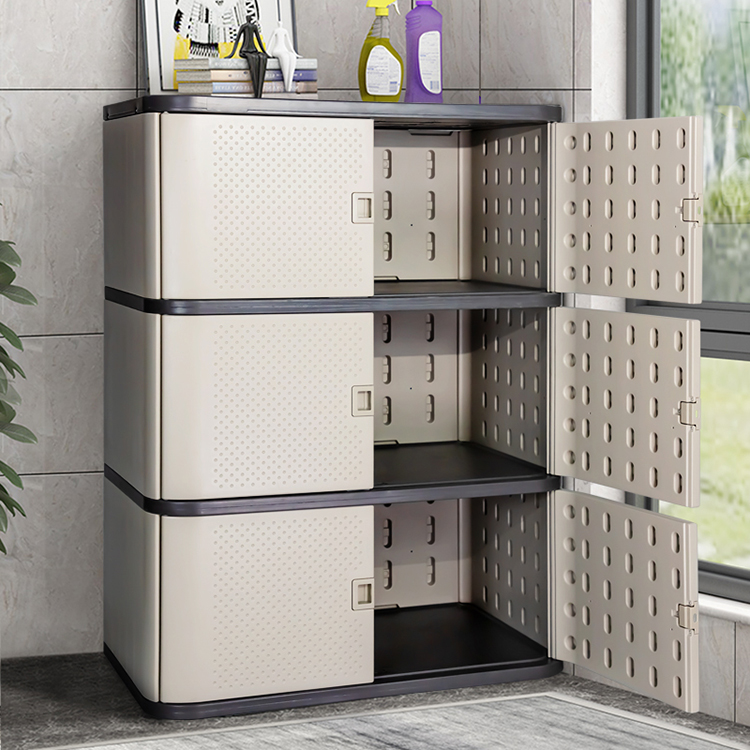
With a Heavy Duty Plastic Locker, things are more stable.
Less variation. Fewer surprises.
For facility managers, that matters a lot.
It’s not about strength — it’s about consistency
Some buyers assume plastic is weaker.
That’s not really the right way to look at it.
The question is not:
“Is it stronger on day one?”
The real question is:
“Does it perform the same after 2–3 years?”
That’s where plastic often wins.
How to Actually Choose the Right Locker (No Sales Talk)
This is the part where most decisions either go right… or create problems later.
Start with the environment, not the product
Before looking at any model, ask:
Is there moisture?
Is there heavy daily use?
Is cleaning frequent?
Is the space controlled or not?
If the answer includes moisture or high usage, a Heavy Duty Plastic Locker is usually the safer direction.
Pay attention to the door — seriously
This gets ignored too often.
The Plastic Locker Door:
moves constantly
carries stress
holds the lock
If the door design is weak, nothing else really matters.
A simple test:
Does it feel stable when opened and closed repeatedly?
If not, move on.
Size should follow behavior, not catalog specs
This sounds simple, but many projects still get it wrong.
Think about actual use:
Students → backpacks, books
Workers → tools, uniforms
Gym users → bags, shoes
If the internal space doesn’t match real usage, the locker becomes inconvenient — even if it looks fine.
Lock choice is not universal
Different environments need different solutions.
Schools → simple locks (easy to manage)
Gyms → shared access (RFID or code)
Offices → smart lockers
Don’t overcomplicate it.
Choose what fits the daily workflow.
Modular design helps later (not now)
At the beginning, everything looks fine.
Problems appear later.
If parts can be replaced individually, you fix issues quickly.
If not, you replace entire units.
That difference shows up after a year or two.
Some Practical Configuration Advice
This is not theory. Just patterns that tend to work.
Schools
Keep it simple.
Durable structure
Easy cleaning
Reliable door
Too many features usually create more issues than benefits.
Gyms
Focus on hygiene and speed.
Moisture resistance
Ventilation
Quick access
Users don’t want to spend time at lockers.
Industrial Use
Prioritize toughness.
Impact resistance
Scratch tolerance
Minimal maintenance
Looks don’t matter here.
Outdoor Areas
Reduce risk.
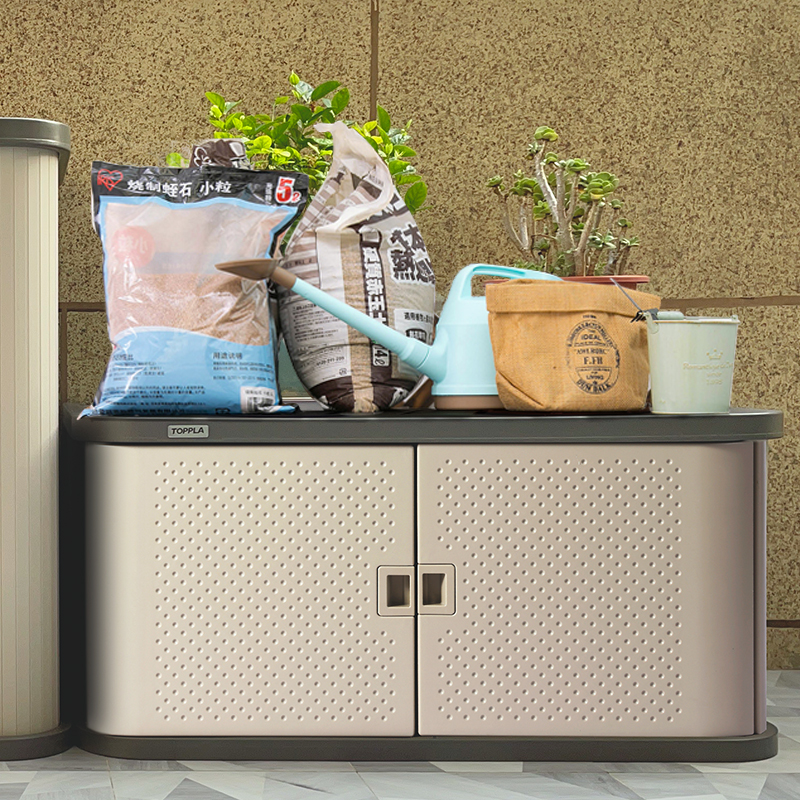
Weather-resistant material
Less metal hardware
Stable structure
Anything exposed to weather needs fewer weak points.
Common Mistakes (Seen Too Often)
Choosing based on price first
It feels logical. But it often backfires.
Lower upfront cost can mean:
more repairs
shorter lifespan
higher total cost
Assuming all plastic lockers are the same
They’re not.
Material quality, thickness, and structure vary a lot.
A “plastic locker” can be very different from a Heavy Duty Plastic Locker.
Ignoring how people actually use lockers
Design should match behavior.
If users treat lockers roughly, the product must handle that.
Otherwise, failure is just a matter of time.
Underestimating the door again
Yes, again.
Because this is where most complaints come from.
If something goes wrong, it’s usually the door.
FAQ
1. Are plastic lockers strong enough for commercial use?
Yes, especially heavy-duty models. They handle daily use well if the structure is properly designed.
2. Can they really replace metal lockers?
In many environments, yes — especially where moisture or corrosion is an issue.
3. Will plastic lockers fade or degrade?
High-quality materials (like HDPE) perform well over time, including in outdoor conditions.
4. Is the Plastic Locker Door durable?
It can be, but design matters. Reinforced hinges and solid structure make a big difference.
5. Are they difficult to maintain?
No. Maintenance is usually simpler compared to traditional materials.
Conclusion
A locker is easy to ignore — until it starts causing problems.
Then it becomes urgent.
A well-chosen plastic locker doesn’t draw attention.
It just keeps working.
And in many environments, that’s exactly what people need.